With the ignition right, the carburettors have a fixed target to aim at. Setting up twin SUs is not a dark art — it is a fixed sequence, done in order and never skipped. Here is that sequence, by ear and by the lifting pin.
First, the golden rule
Do the ignition first, and make sure the engine is mechanically sound and fully warm before you touch a carburettor. Cold, or with an air leak at a worn throttle spindle, no amount of adjustment will come right. Work in this order — float level, jet centring, balance, then mixture — because each step depends on the one before.
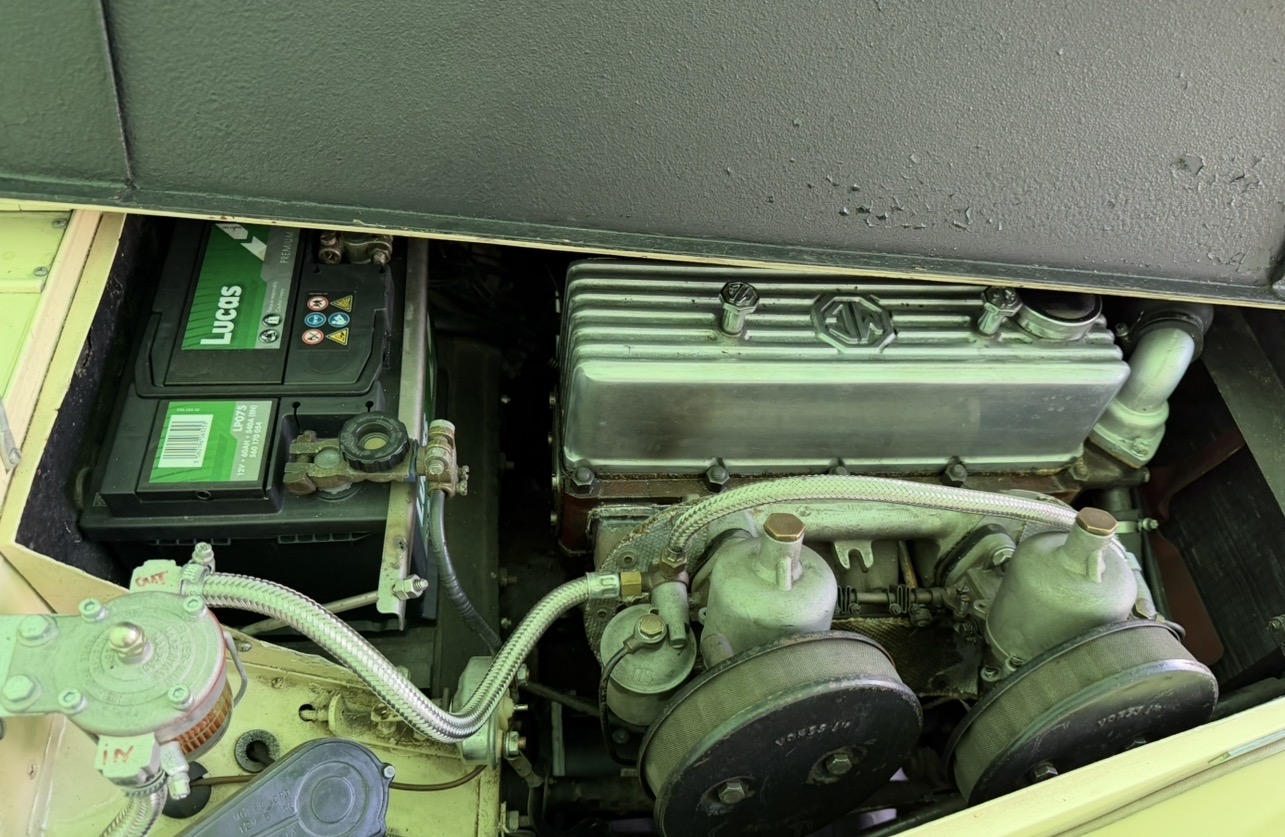
1. Float level
The float chamber must hold petrol at the right height, because that sets where the fuel sits in the jet before the engine even draws on it. Too high floods and richens; too low starves. It is checked with the float-chamber lid off, to the dimension in the manual, and set by adjusting the float or its tab. Both carburettors must match — an uneven pair can never be balanced.
2. Jet centring
The jet must sit dead concentric around the needle, so the piston falls freely and the needle never rubs. The classic check: remove the damper and air filter, lift the piston with a finger and let it drop — it should fall with a clean, audible click onto the bridge. A dull or sticky landing means the jet is off-centre. Centring is done with the jet-locking nut slackened, letting the assembly settle true around the needle before nipping it up. An off-centre jet makes correct mixture impossible, so this is not a step to skip.
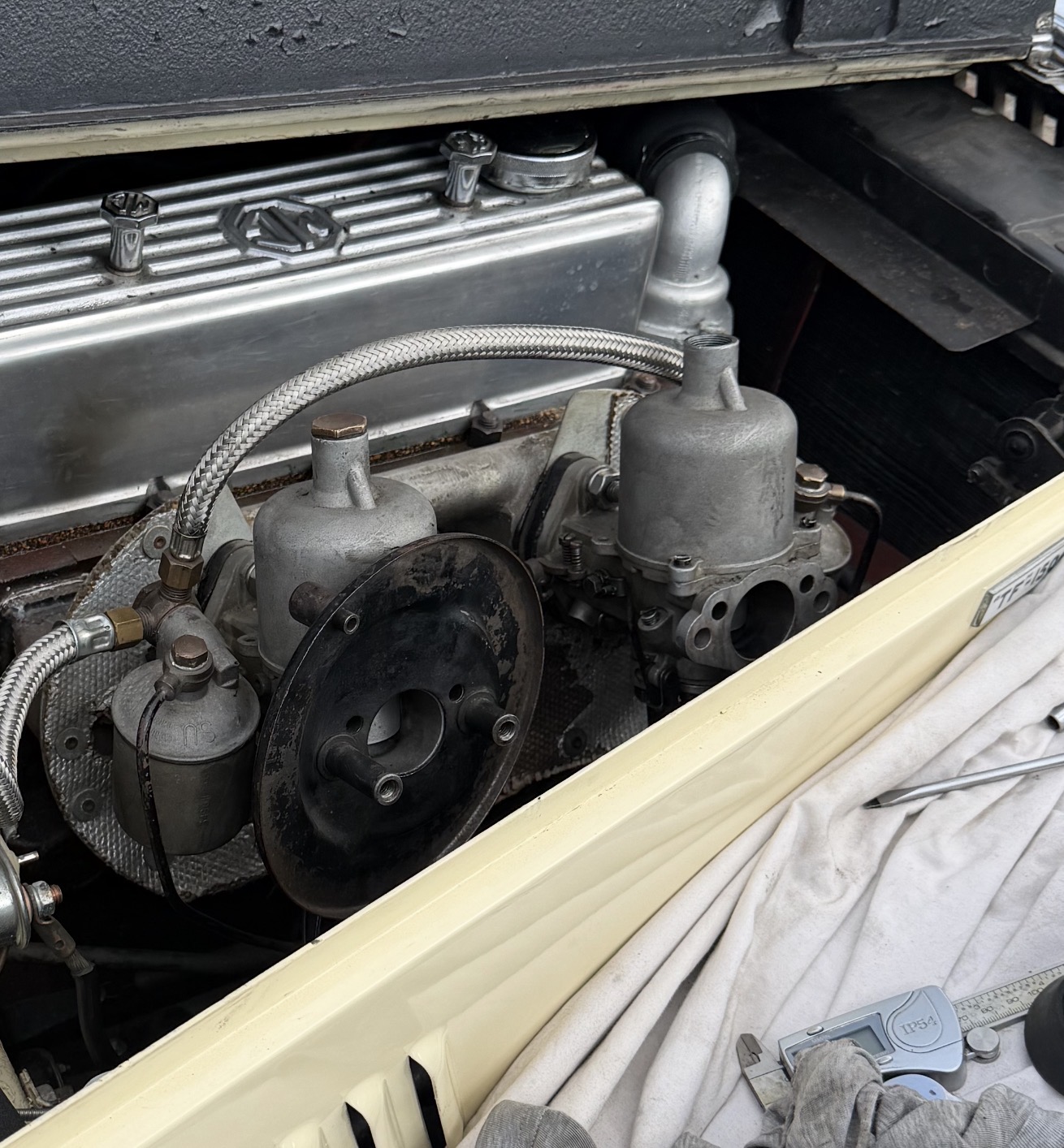
3. Balance the pair
Two carburettors must draw exactly the same air at idle, or they fight each other and no mixture setting will feel right. Warm the engine, disconnect the throttle linkage between the carbs, and use a balancing meter (a Unisyn or similar) — or simply listen at each intake with a length of tube — adjusting each carburettor's idle screw until both pull equally. Then reconnect the linkage so they open together. Balance and mixture affect each other, so you will come back and re-check this.
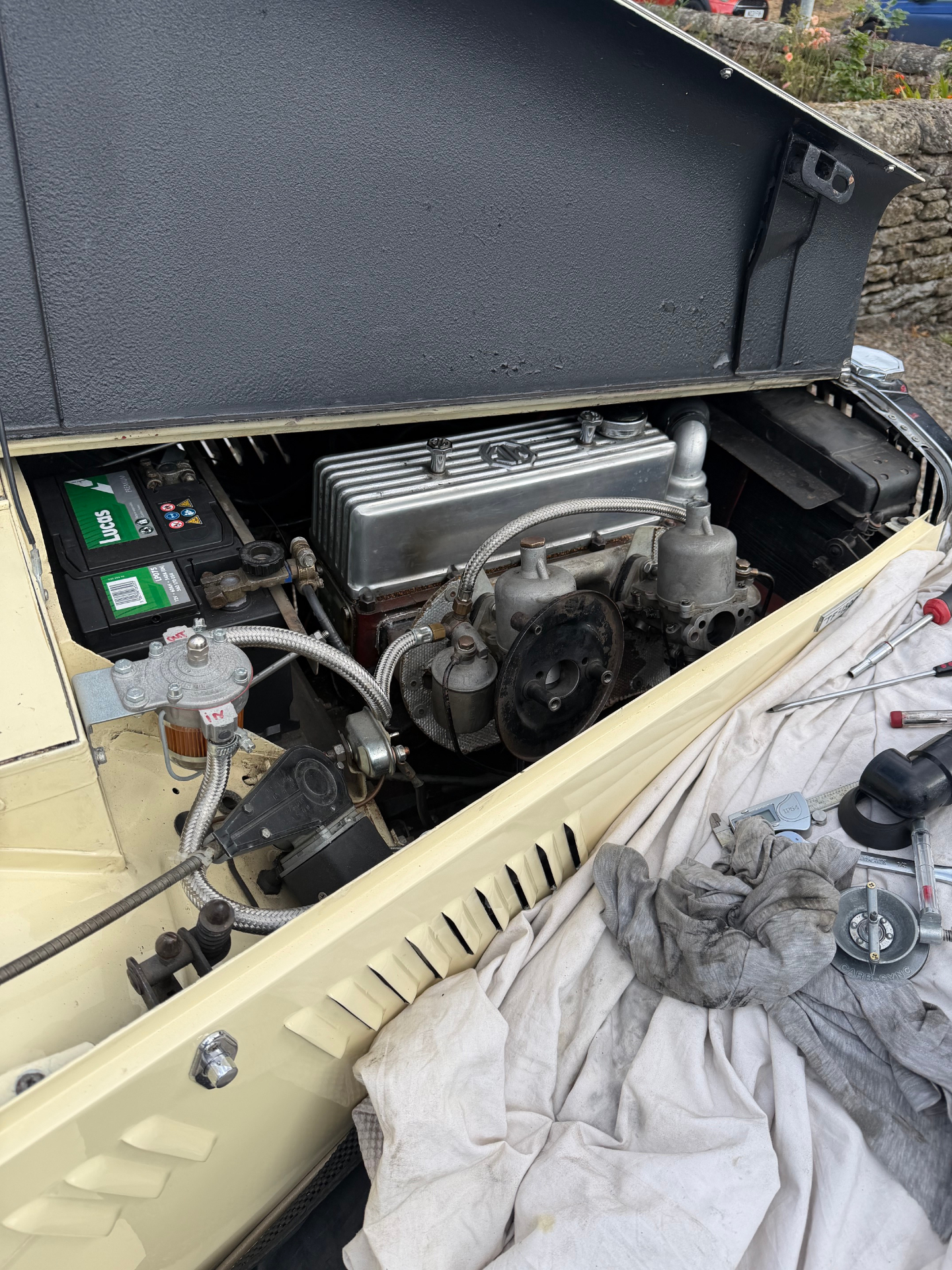
4. Mixture — by ear and lifting pin
Now the fuelling. Mixture is set by raising or lowering the jet with the adjusting nut — down richens, up weakens — a flat at a time. The test is the piston lifting pin: with the engine idling and warm, lift the pin a whisker (about a millimetre) and watch the response. If the revs rise and stay up, it is too rich — weaken it. If the revs drop or the engine stumbles, it is too weak — richen it. If the revs rise very slightly and settle straight back, the mixture is right. Set each carburettor the same way, front then rear, a flat at a time, re-testing after every move.
The objective check, reading the exhaust
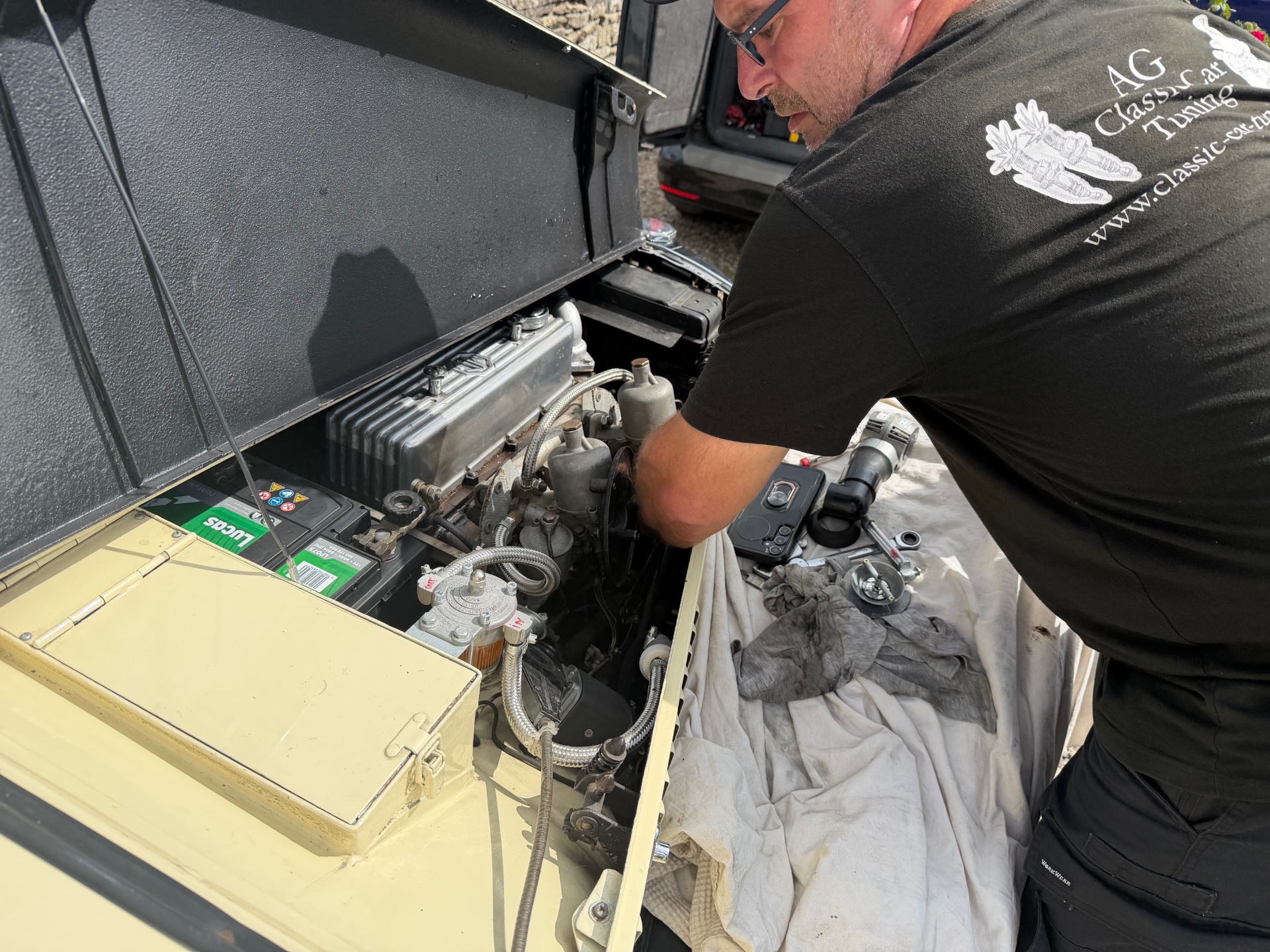
The lifting-pin test is quick and needs no equipment, but it has real limits: it only judges the mixture at idle, under no load, and how far you lift the pin changes the answer. This is why a professional like Andrew reaches for an exhaust gas analyser, a meter whose probe goes into the tailpipe (or a clamp/sensor on the pipe) and reads what is actually coming out of the engine. Where the pin test infers the mixture from how the engine responds, the analyser measures it directly.
Why the exhaust tells you the mixture
Combustion leaves a chemical fingerprint, and the exhaust carries it. When the mixture is rich there is not enough air to burn all the fuel, so unburned carbon leaves as carbon monoxide, and the amount of CO climbs almost in step with how rich the engine is running, which makes it a superb, sensitive measure of richness. A lean mixture shows the opposite: little CO but excess oxygen. Unburned hydrocarbons (HC) are the other key reading, a spike in HC means fuel is escaping unburnt, the classic signature of a misfire, a leak or an ignition fault. Read together, CO tells the tuner how rich or weak the mixture is, and HC warns whether the burn itself is clean.
Lambda, putting a number on it
Modern analysers boil all this down to a single figure, lambda. Lambda is simply the ratio of the air the engine actually got to the air it would need to burn its fuel perfectly. Lambda of 1.00 is bang on that ideal (stoichiometric) mixture; below 1.00 is rich, above 1.00 is lean, so 0.95 is five per cent rich, 1.05 five per cent lean. A classic engine is usually set a touch rich of 1.00 for a little protection and smooth running, and the tuner adjusts the jets to bring the reading to the target the engine wants. The beauty of it is objectivity: no guessing from engine note, just a number, repeatable every time.
It doesn't replace the basics
An analyser makes mixture-setting precise, and on twin SUs it lets the tuner match the two carburettors exactly and see how the mixture behaves as the throttle opens, something the pin test cannot show. But it sits on top of the sequence, it doesn't skip it: the float level, jet centring and balance still have to be right first, and a healthy ignition still comes before any of it. The analyser is how a professional confirms and fine-tunes what the method has already got close, which is exactly how Andrew uses it on these cars.
5. Idle, and round again
With balance and mixture close, set the idle speed to the book figure on the (linked) idle screws, kept equal. Snap the throttle open and shut a few times to let everything settle, then re-check the balance, and re-check the mixture — the two are interdependent, and a proper set-up means going round the loop once or twice until nothing needs touching. When it idles evenly, picks up cleanly off idle, and the lifting-pin test reads right on both carburettors, you are done.
Quick lean-vs-rich check
Before you reach for the jet nut again, listen and look. Most mixture problems show a clear signature once you know what to watch for. Use this as a roadside sanity check after the lifting-pin test.
| Symptom | Likely direction | First thing to check |
|---|---|---|
| Engine stalls when the throttle is snapped open | Too weak | Lifting-pin test — revs drop or stumble |
| Hesitation or flat spot on acceleration | Too weak | Damper oil level and grade; piston rising too fast |
| Black, sooty plugs; strong petrol smell at idle | Too rich | Float level too high or needle/seat worn |
| Revs hang high and slowly settle back to idle | Too rich | Lifting-pin test — revs rise and stay up |
| Popping back through the carburettor at light throttle | Too weak or ignition miss | Spark first, then mixture; check for air leaks |
| Popping or banging from the exhaust on overrun | Too rich or unburned charge | Mixture and ignition timing together |
Remember that a weak mixture can also be caused by air being drawn in downstream of the carburettor — a split manifold gasket, a loose carburettor flange, or a worn throttle spindle — so always rule out leaks before you keep richening the jet.
When it still will not come right
If you cannot get a clean mixture however you set the jet, stop adjusting and look for a fault, because you cannot tune around one. The usual culprits are an empty or wrong-grade damper (top it up first — it takes thirty seconds), a worn throttle spindle drawing air, a punctured float, a dropped or worn jet and needle, or a needle clipped at the wrong height. Fix the cause, then set up from step one.
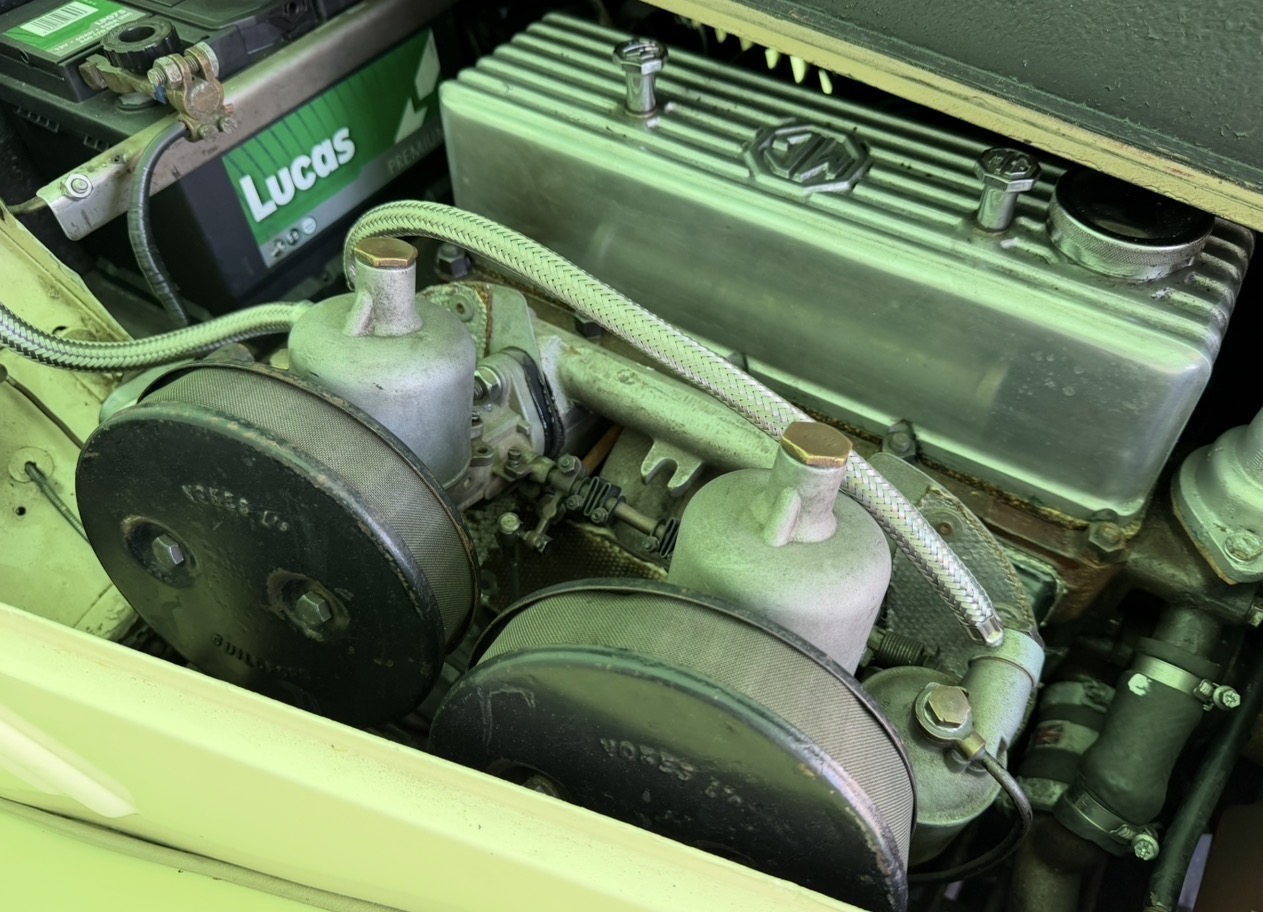
With thanks to Andrew at AG Classic Car Tuning, mobile classic-car tuning specialists in North Yorkshire.