1954 – 4 April 1955
The MG TF 1500
The last and fastest of the traditional MGs.
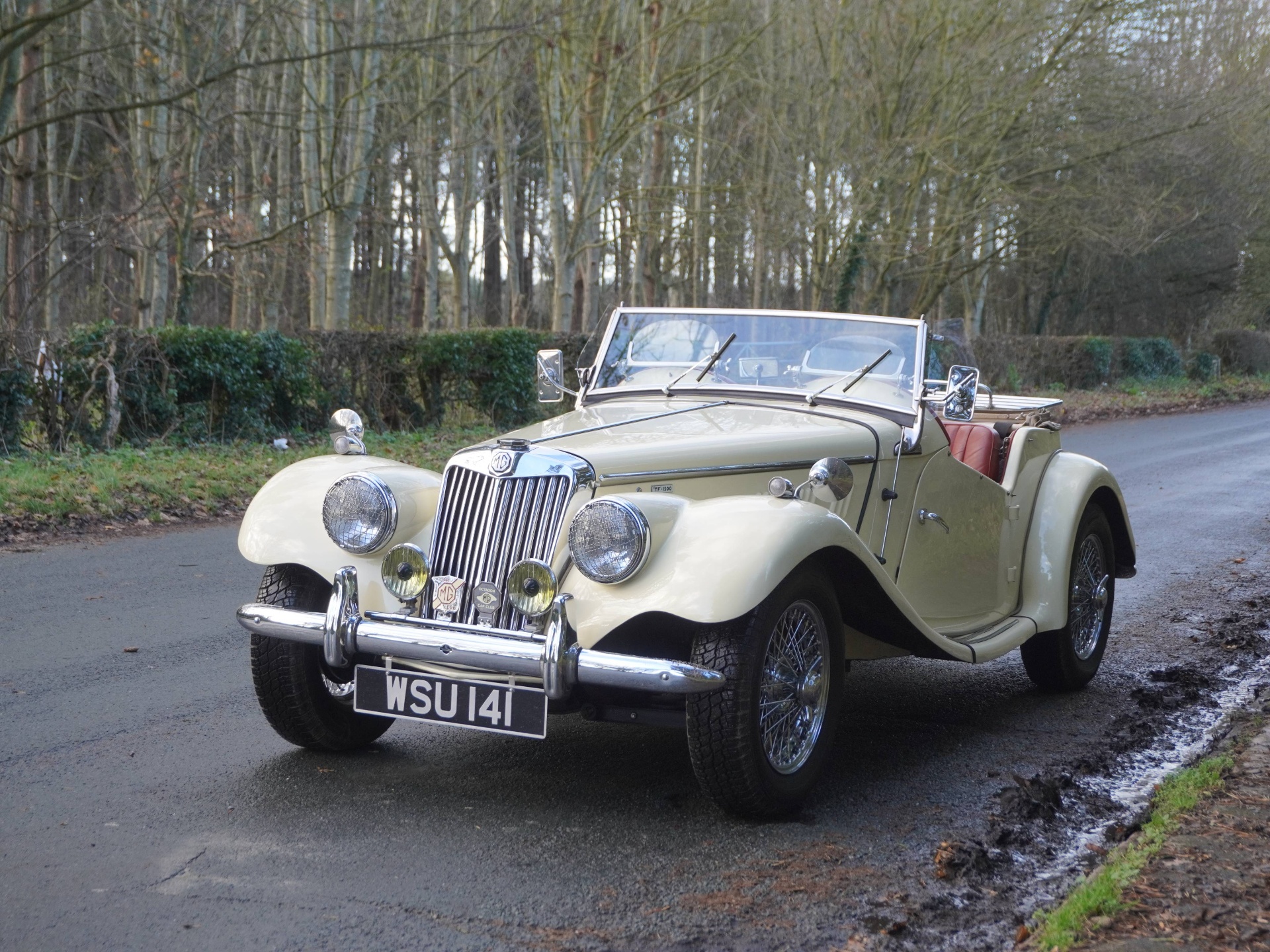
The MG TF 1500 is the last and fastest of the T-Series, and the answer to the TF's one great criticism. Introduced in the summer of 1954 with the new 1,466 cc XPEG engine, just 3,400 were built before production ended on 4 April 1955, and almost all of them went to America.
This page covers the 1500 specifically. For the full MG TF reference, specifications, chassis and engine numbers, production figures, buying checks and values, see the MG TF model reference.
The problem the 1500 solved
When the TF arrived in October 1953 it was a facelifted TD, and many enthusiasts were disappointed. They had hoped for more power. The Triumph TR2 could exceed 100 mph; the TF managed about 80 flat out. Mechanically it was reliable and it drove beautifully, impeccable roadholding and handling, but against its competitors it was embarrassingly slow in a straight line. It is well known that Abingdon would rather not have built the TF at all, had the MGA project been approved earlier. Something had to be done.
The XPEG engine
Late in the summer of 1954 the answer arrived: a new 1,466 cc engine designated XPEG. It was in most respects very similar to its predecessor, the XPAG/TF. The trick was siamesing the cylinders, which allowed a larger 72 mm bore within the same block. With larger pistons, stronger connecting rods and compression raised to 8.3:1, the new engine produced 63 bhp at 5,000 rpm. On paper that is only about 9 per cent more power than the 1250, but torque rose by roughly 18 per cent, and torque is what an owner actually feels: the 1500 pulls where the 1250 has to be worked.
Externally there were almost no clues. The TF 1500 hid its advantage well.
Telling a TF 1500 from a 1250
There was remarkably little to give a TF 1500 away: two discreet cream-background enamel "TF 1500" motifs on the bonnet sides, just behind the forward bonnet release buttons, and two rear reflectors. Nothing else, and the earliest cars did not even have that. The first TF 1500s carried no nameplate at all, at least up to the October 1954 London Motor Show cars, chassis TF/7252 and TF/7253, a fact confirmed by the period Road & Track road test.
The reliable identifier is the engine: TF 1250 engines are marked XPAG/TF, TF 1500 engines simply XPEG/, for example XPEG/524, and never XPEG/TF/. There is no dependable correlation between chassis number and engine type, because XPEG engines were fitted in alternating batches. Cars TF 6501–6650 received XPEG from 21 July 1954, then 6651–6750 reverted to XPAG/TF, 6751–6850 XPEG again, 6851–6950 XPAG/TF, and from TF 6951 onward, from 10 September 1954, XPEG to the end of production. For the full sequence of changes during production, from the October 1953 launch to the last car in April 1955, see the TF production timeline. For what a correct car should have, component by component, see the MG TF 1500 originality guide. For the engine family itself, the 1,250 cc unit and its 1,466 cc successor, see the XPAG engine hub.
A car built for America
The larger engine did what it was meant to do and lifted sales, but almost entirely in the United States. Of the 3,400 TF 1500s built, only a handful were sold new in the UK. A home-market right-hand-drive TF 1500 is therefore a genuinely rare thing.
The end of the line
Production ended on 4 April 1955 after 9,602 TFs of both capacities, including two prototypes. The MGA replaced it, and with it went the last of the traditional, upright, ash-framed MGs. The TF 1500 is where that line stops.
A note on naming: you will see both "TF1500" and "TF 1500". The bonnet badge reads TF 1500.
From the Workshop
Related case studies
Real-world reports and technical guides that bear directly on owning, buying and keeping a TF 1500 on the road.
Case study
A TF 1500 Health-Check: Overcharging & a Rich Mixture
Post-purchase inspection: 17 V+ charging, fouled plugs and debris in the SUs.
Electrics
The Lucas RB106/2 Voltage Regulator
How the control box works, calibration figures and fault-finding.
Identification
Chassis & Engine Number Identification
Where to find them and how XPEG numbers differ from XPAG/TF.
Tuning
SU Carburettor Tuning
Balancing, mixture and the lifting-pin test on twin H-types.
Fuel & oil
Fuel, Oil & Additives
Ethanol, ZDDP and what to run in an XPEG in modern conditions.
Buying
Auction, Dealer or Private?
Where TF 1500s turn up and what to check before you commit.