Values & Price Guide
MG T-Series Values
Sourced price bands run from about £8,000 for a running project to around £51,400 for a concours TA, with the TC roughly £13,900–£46,600, the TD £10,500–£35,200 and the TF £10,000–£45,000. Model by model below, honest about uncertainty.
Summary
MG T-Series values range from around £10,000 for a needy TD to over £50,000 for a concours TA. Broadly, the pre-war TA leads, the TC follows on fame, the TD is the bargain, and the TF, especially the TF1500, sits between. Condition, originality and restoration quality matter far more than model.
1. Values at a glance
Indicative UK ranges by condition. Figures below are sourced from Hagerty UK's valuation tool as published in 2022, please check against current sources before buying or selling.
| Model | Project / Needy | Good / Usable | Excellent | Concours |
|---|---|---|---|---|
| MG TA | £8,000–£12,000* | ≈£15,000 (fair) | ≈£35,900 | ≈£51,400 |
| MG TBOnly 379 built; expected to exceed TA values on rarity, but public sales are too thin for reliable statistics. | Too few sales | Too few sales | Too few sales | Too few sales |
| MG TC | ≈£13,900 (needy) | £20,000–£30,000* | £30,000–£40,000* | ≈£46,600 |
| MG TD | ≈£10,500 (needy) | £15,000–£22,000* | £25,000–£30,000* | ≈£35,200 (perfect) |
| MG TF (1250)Ranges derived from Hagerty UK 2022 bands plus current Classic Trader marketplace observation. TF1250 sits below TF1500. | £10,000–£14,000* | £18,000–£24,000* | £28,000–£36,000* | £38,000–£45,000* |
| MG TF 1500Roughly a 20–25% premium over the TF1250 reflected in Classic.com US market averages (see below). | £12,000–£16,000* | £22,000–£28,000* | £32,000–£40,000* | £42,000–£50,000* |
Sources: Hagerty UK Valuation Tool (published 2022) for TA / TC / TD / headline TF figures; TF1250 / TF1500 ranges combine Hagerty UK 2022 bands with Classic Trader marketplace analysis (Jan 2021 – Dec 2025) and Classic.com US market averages (consulted July 2026). Verify against current sources, see §10.
Estimated range derived from sourced band figures and current market observation, not a directly published figure.
2. What the condition bands actually mean
Most valuation guides define bands generically. For a T-Type, these are the specifics that matter.
- Project
- Needs everything. Assume ash-frame repairs, full bodywork, engine rebuild, retrim. Often no MOT and hasn't run in years.
- Good / usable
- Drives and stops properly, sound frame, tidy but not show paint, some non-original details. The car most people actually buy.
- Excellent
- Professionally restored or exceptionally preserved, correct in most details, sound frame, strong engine and oil pressure, presentable everywhere.
- Concours
- Show-standard, correct to specification, documented restoration, everything right including the details judges look at.
3. The TF1250 vs TF1500 premium
Current US market averages show a clear and consistent premium for the larger-engined TF1500 over the earlier TF1250.
| Model | US market average | Engine | Approx. built |
|---|---|---|---|
| TF (1250) | ≈ $21,366 | XPAG, 1,250 cc | ≈ 6,200 |
| TF 1500 | ≈ $26,171 | XPEG, 1,466 cc | ≈ 3,400 |
Source: Classic.com market averages, consulted July 2026. Premium of roughly 20–25% for the TF1500. The premium is visible in the US data and broadly reflected in European asking prices.
Why the premium: more usable performance from the 1,466 cc XPEG engine; the TF1500 was the last and most developed T-Type; fewer built (~3,400 of ~9,600 TFs).
Buyer warning: verify the engine is a genuine XPEG, not an XPAG in a TF1500-badged car. See Chassis & Engine Number Identification.
4. Model by model
MG TA (1936–1939)
≈£15,000 (fair), ≈£35,900 (excellent), ≈£51,400 (concours)
- Why it sits here
- Pre-war rarity and the beginning of the T-Series story. Increasingly recognised by collectors who value provenance over performance.
- Who buys it
- Pre-war enthusiasts and MMM-adjacent collectors.
- What to watch
- MPJG engine originality; ash frame; correct pre-war fittings; single-family history.
MG TB (1939)
Too few public sales for reliable statistics, expected above TA.
- Why it sits here
- Only 379 built before the war stopped production. Introduced the XPAG engine. Genuine TBs are rare and normally sell privately.
- Who buys it
- Serious collectors seeking a specific chapter of the story.
- What to watch
- Provenance is everything. Verify chassis and engine numbers against T Register records.
MG TC (1945–1949)
≈£13,900 (needy), £20,000–£30,000 (typical), ≈£46,600 (concours)
- Why it sits here
- The car that took the MG name to America. Fame, story and a large enthusiast base underpin values.
- Who buys it
- Traditional MG enthusiasts, US collectors, first-time T-Type buyers.
- What to watch
- Ash frame, correct XPAG engine, correct wire wheels, hood and side screens present.
MG TD (1950–1953)
≈£10,500 (needy), mid-£20,000s (good), ≈£35,200 (perfect)
- Why it sits here
- The value entry point. Independent front suspension, rack-and-pinion steering, objectively the better car than the TC. Just less romantic.
- Who buys it
- Owner-drivers who want to use a T-Type on modern roads.
- What to watch
- Ash frame, XPAG oil pressure, wheel bearings, front suspension bushes.
MG TF 1250 (1953–1954)
£18,000–£24,000 (good), £28,000–£36,000 (excellent), up to ≈£45,000 (concours)
- Why it sits here
- The most stylish T-Type body, but launched at a moment when the market had moved on. Now valued for its lines.
- Who buys it
- Buyers who put design first.
- What to watch
- XPAG condition; correct sloping radiator grille and faired-in headlamps; ash frame.
MG TF 1500 (1954–1955)
£22,000–£28,000 (good), £32,000–£40,000 (excellent), up to £50,000 (concours)
- Why it sits here
- The final and most developed T-Type. Larger 1,466 cc XPEG engine gives useful performance. Fewer built than the TF1250.
- Who buys it
- Buyers wanting the best of the TF line.
- What to watch
- Genuine XPEG, verify the engine number and prefix. See the identification article.
5. What adds and subtracts value
Adds value
Documented history
Restoration invoices, MOT history, ownership chain, the paper trail matters as much as the metal.
Matching numbers
Original engine of the correct type (MPJG for TA, XPAG for TB/TC/TD/TF, XPEG for TF1500).
Sound ash frame
Professionally repaired or original, the single biggest hidden variable.
Correct original colour and trim
Period-correct paint, hood, side screens and interior specification.
Heritage Certificate
British Motor Heritage Trust document verifying original build details.
Long-term ownership
Single-family or long-term careful ownership commands a premium.
Correct wire wheels
In sound condition on the early cars (TA, TB, TC).
Subtracts value
Rotten or bodged ash frame
The most expensive fault to fix, expect five figures to put right.
Wrong or replacement engine
A TF1500 with an XPAG, or a TC with a later XPAG, materially reduces value.
Poor-quality restoration
Filler hiding structural rot; over-restoration erasing originality.
Missing weather equipment
Missing hood, side screens and tonneau are expensive to replace.
Non-original colour
Especially if applied without documentation.
Incomplete history
No paperwork, unknown provenance, gaps in ownership.
Long-term storage without recommissioning
"Barn find" almost always means a full mechanical rebuild.
Neutral / market-dependent
Five-speed conversion
Improves usability on modern roads; may reduce the originality premium.
LHD vs RHD
Depends entirely on the sale market. LHD suits the large US market; RHD is preferred in the UK.
Mild sympathetic upgrades
Uprated cooling, electric fan, alternator conversion, accepted by most buyers.
6. Restoration economics, the honest warning
On a T-Series, a cheap project will almost always cost more to restore than buying a good car outright. Ash-frame work, coachbuilt panel fitting, paint, trim, chrome and an engine rebuild add up fast, and the finished car is typically worth less than the sum spent. Coachbuilt cars (Tickford, Airline, Arnolt-MG) sit outside the published values series and warrant specialist valuation, see Coachbuilt T-Types.
The one exception: a genuinely rare car, a TB, or a documented factory special, can justify restoration on originality grounds, because the finished value is anchored by rarity rather than by the model's typical market ceiling.
7. Understanding the outliers
Headline auction results mislead. The highest recorded public T-Type sales include a TC at around $179,200 and a supercharged TD special at around $121,000, and one TC has reportedly changed hands for a sum in the hundreds of thousands. These are competition cars, documented specials, or cars with exceptional provenance, they are not comparables for a standard road car.
Equally, the lowest recorded sales, a TD at around $3,100 and a TC at around $4,729, are projects or incomplete cars, not usable examples.
Learn to discount both extremes when valuing.
8. Market commentary
Classic Trader marketplace analysis of sales from January 2021 to December 2025 describes the T-Type market as broadly stable to slightly firmer, with strong prices for well-presented, correctly-specified cars and softer figures for projects. This is a mature market, provenance, restoration quality and correct parts matter most.
UK, European and US markets differ, and a car's value depends partly on where it is sold. Current European asking-price context:
| Segment | European asking-price range |
|---|---|
| Volume models (broadly) | €20,000 – €40,000 |
| TD | High-€20,000s to mid-€30,000s |
| TF / TF1500 | €25,000 – €45,000 |
| TC | ≈€30,000 into the mid-€40,000s |
Source: Classic Trader marketplace analysis (sales data January 2021 – December 2025), consulted July 2026. Asking prices are not achieved prices.
9. How to value your own car
- Establish the model and engine type from the chassis and engine numbers. See the identification article.
- Assess the ash frame honestly, pay for a professional inspection if you are unsure. This one factor can move a car a full band.
- Grade against the condition bands above. Be honest, most cars sit at "Good / usable", not "Excellent".
- Gather documentation: Heritage Certificate, restoration invoices, MOT history, ownership chain.
- Compare against live sources: Hagerty's valuation tool, recent auction results, and current classified asking prices. Remember asking prices are not achieved prices.
- Obtain an independent professional valuation for insurance or sale. Prefer agreed-value classic-car insurance to market value.
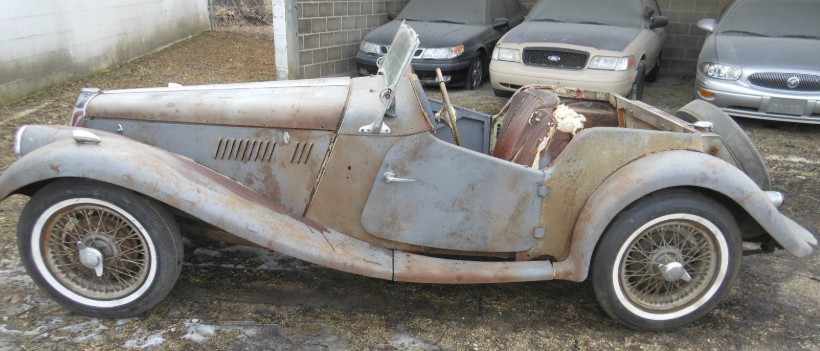
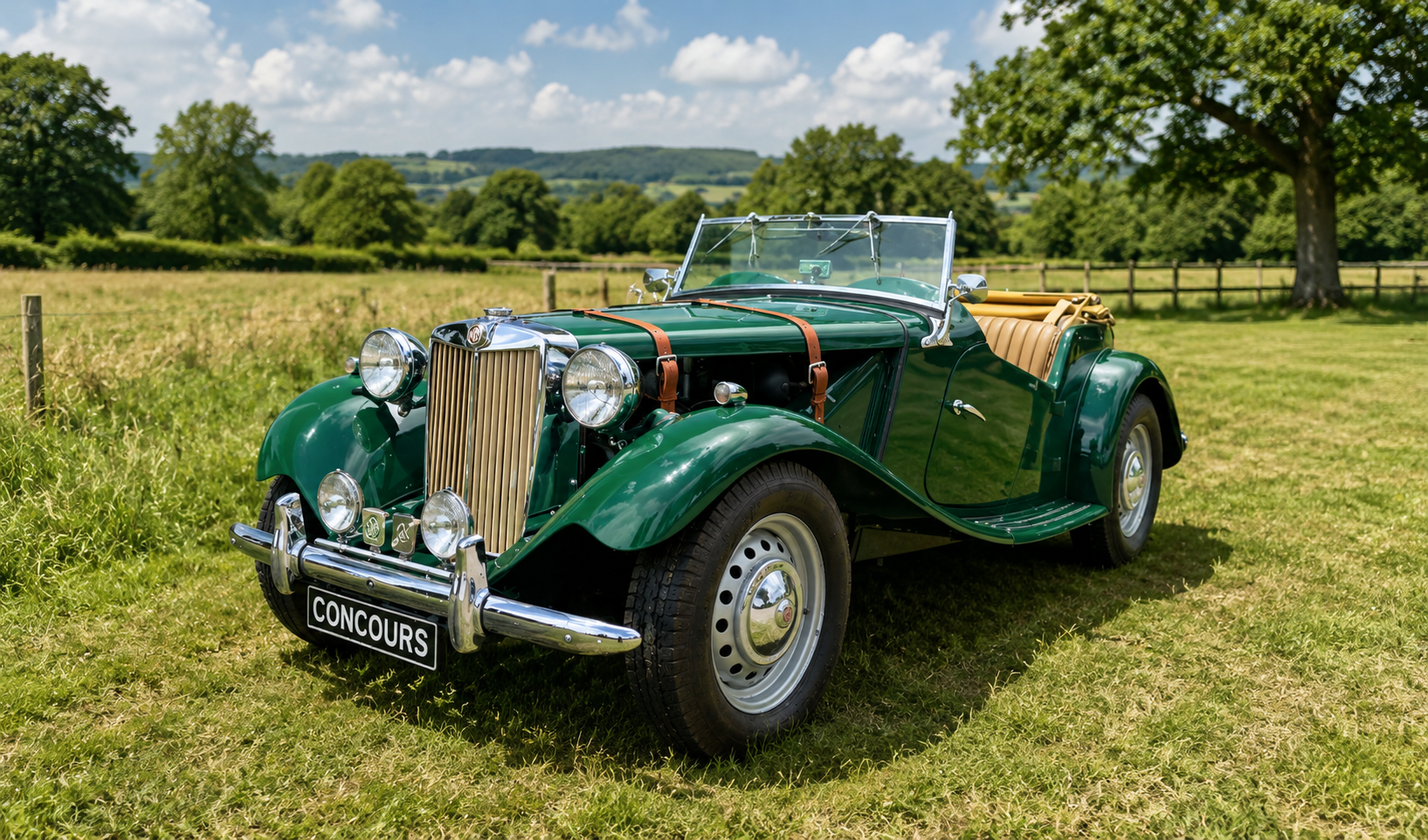
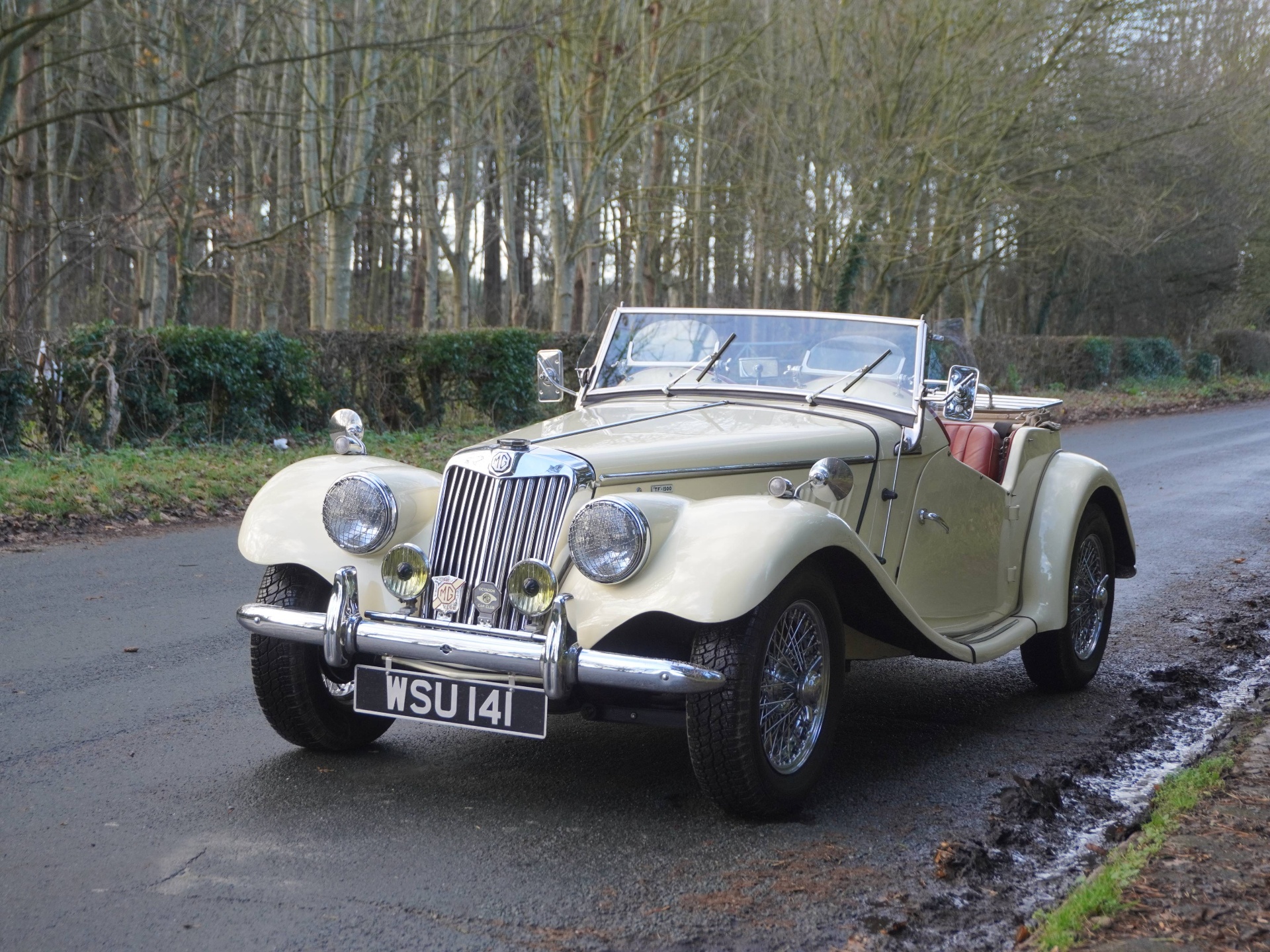
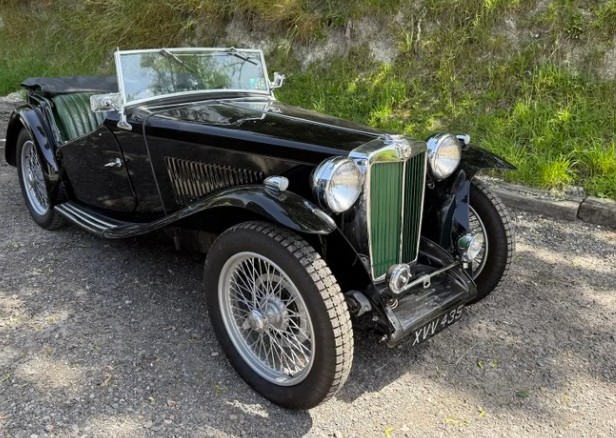
Examples at each condition level
Owner-submitted examples showing what each condition band looks like in practice. Contact us to contribute a photograph of your car.
Values, parts and clubs for US owners
The figures above are UK-first, because that is the market this archive is written from. But most TCs and TDs were built for export to North America, and a dollar market behaves differently: don’t convert a sterling figure and assume it holds.
Dollar benchmarks
- MG TC, good condition, around $19,400 (Hagerty US guide, January 2026, shown as down 9.8% on the previous period).
- MG TF 1500, good condition, around $13,800 (same guide; we treat the reported 28.1% fall as one publisher’s number, uncorroborated elsewhere).
- Ordinary usable cars, roughly $12,500–$18,000 on recent closed US auction results.
- Best restored cars, up to about $30,000; older refurbishments have gone for as little as $10,750, and a TF 1500 on MGB running gear made $7,500 against $22,050 for a standard car.
Sources: Hagerty US valuation guide (January 2026) and public US auction results as recorded in On the Market. Individual results are single cars, not averages.
US suppliers and clubs
- New England MG ‘T’ Register (NEMGTR) , the international register for T-Series and vintage MGs, publisher of The Sacred Octagon, with classified ads and spares data for members.
- Moss Motors , the largest US catalogue supplier for TC, TD and TF mechanical and consumable parts.
- Abingdon Spares , a T-type specialist: new, used and NOS parts, TC and TD coachwork timber, carburettor components and identification plates.
Two things to price in that the UK figures above don’t capture: US labour rates for coachwork, and shipping on bulky items such as body timber, wings and hoods if they come from a UK supplier. For insurance, the agreed-value principle still applies, but the UK broker names on the insurance guide are not available to US owners: Hagerty and comparable US specialist insurers are the equivalent.
10. Sources & methodology
Figures are compiled from Hagerty UK's published valuation tool, Classic.com US market averages (consulted July 2026), Classic Trader marketplace analysis of European sales from January 2021 to December 2025, and aggregated public auction results accessed via those marketplaces. Where sources conflict we present the discrepancy rather than averaging silently. This page is reviewed at least twice yearly.
Hagerty UK Valuation Tool, MG T-Series entries
Consulted: 2022 (as published)
Primary source for the four-band condition figures used in the hero table.
Classic.com, TF1250 and TF1500 market averages
Consulted: July 2026
Used for the TF1500 vs TF1250 premium analysis (US market averages).
Classic Trader marketplace analysis, sales data Jan 2021 – Dec 2025
Consulted: July 2026
Used for market commentary and current European asking-price context.
Aggregated public auction and marketplace results via Classic.com and Classic Trader
Consulted: July 2026
Used for outlier discussion and headline sales, sourced through Classic.com and Classic Trader aggregation, not consulted directly with the auction houses.
MG Car Club T Register production records
Consulted: 2025
Model identification and production numbers.
Frequently asked questions
How much is an MG TC worth?
In 2022 Hagerty UK indicated a needy TC at around £13,900, typical usable cars at £20,000–£30,000, and concours cars at approximately £46,600. Current asking prices in Europe run from around €30,000 into the mid-€40,000s. Condition, ash-frame integrity and documentation drive the spread, verify against current sources before buying or selling.
How much is an MG TD worth?
Hagerty UK (2022) placed a needy TD at around £10,500 and a perfect example at approximately £35,200. The TD is the value entry point to T-Type ownership, objectively the better car than the TC in most ways, but subjectively less romantic and less collectible, so the most affordable route in.
Is an MG TF1500 worth more than a TF (1250)?
Yes, typically 20–25% more. US market averages have shown the TF1500 at around $26,171 against $21,366 for the TF1250. The premium reflects better usable performance from the 1,466 cc XPEG engine, the TF1500 being the last and most developed T-Type, and lower production (~3,400 of ~9,600 TFs). Always verify the engine is a genuine XPEG.
Which MG T-Type is worth the most?
In condition-matched comparisons the pre-war TA leads: Hagerty UK (2022) put a concours TA at approximately £51,400, ahead of a concours TC at ≈£46,600 and TD at ≈£35,200. The TB would likely command more still on rarity (379 built) but is too thin in the market for reliable statistics.
Are MG T-Series values rising?
Broadly stable to slightly firmer across 2021–2025 based on European marketplace analysis. Well-presented, correctly-specified cars hold or gain value; projects and cars with problems have softened. This is a mature market, provenance and restoration quality matter more than any general trend.
Is an MG T-Type a good investment?
Treat any classic car as an enthusiast purchase, not an investment. T-Types have held value well over decades and rare or exceptional cars have appreciated, but running, maintenance and insurance costs are real. Buy the best car you can afford, enjoy it, and any financial return is a bonus, not a plan.
Is it cheaper to buy or restore an MG T-Type?
Almost always cheaper to buy. A full restoration, ash frame, coachbuilt panels, paint, trim, chrome, engine, will typically cost more than a good running car is worth. Restore only if the car has personal or historical significance, or if you can do the work yourself and value the process.