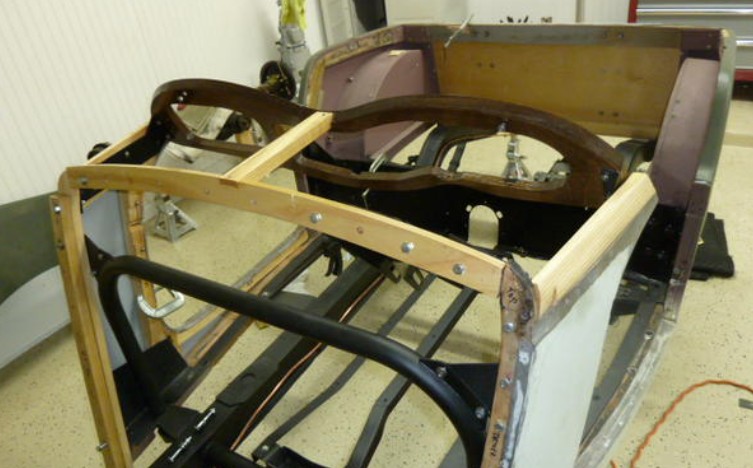
The ash frame. This is the one that matters
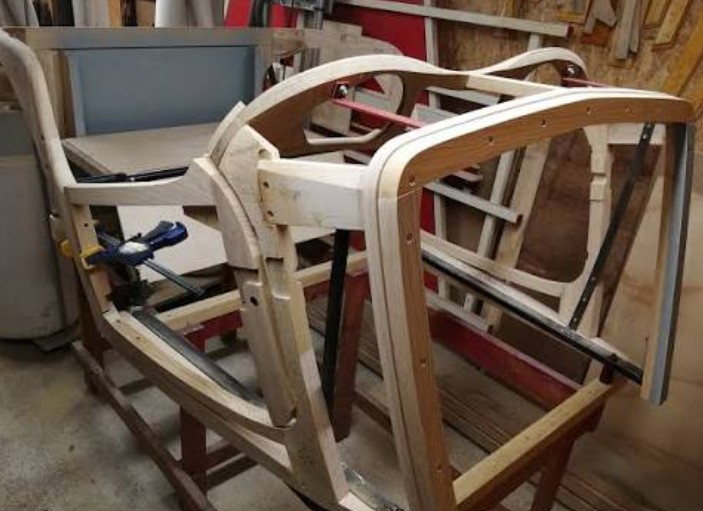
A T-Type's body tub is a skeleton of ash with metal panels tacked onto it. The chassis beneath is steel; the tub is wood. Rain gets between the two and begins separating them, and these cars were never remotely waterproof, the hoods and side curtains seal poorly at the best of times. Morgan reckon a wood frame needs replacing every seven years if a car lives outdoors. A T-Type that has been garaged, or spent its life in a dry climate, is worth a real premium; one that has sat outside needs excellent provenance or a recent, documented restoration.
Look around and between the A- and B-posts first. The wood below there is exposed and is usually the first to rot. Then get underneath: the large main wood rails running down each side are visible from below, and most of the rest is hidden behind metal, so this is your best honest view of the frame.
Doors that have dropped are the first sign of structural trouble.
Open and close both doors. Slight movement is acceptable; sloppiness is not. Then stand back and sight along the car, if the body lines don't align, something is wrong with the frame. Be aware that the ash frame on almost any surviving T-Type has been rebuilt or replaced at some point, and there is plenty of scope for that work to have left it neither straight nor symmetrical.
Two quick tests tell you a great deal. First, take hold of the scuttle, the panel below the windscreen, and try to rock it gently from side to side: on a car whose body-tub timber has rotted, it will move, and in a bad case move alarmingly. Second, check that the seam where the bonnet's top panel meets its side panels lines up with the seam on the scuttle just below the windscreen pillars. If those lines don't meet, the body frame has moved, or been rebuilt out of true.
A complete new timber skeleton costs somewhere around £5,000 as a kit, before anyone fits it, and fitting is labour-intensive work that is not for the faint-hearted. Price accordingly.
For how the tub is built, where it rots and what repair or a full re-frame involves, see the ash frame reference.
Rust, where it does occur
Rot matters more than rust on these cars, but rust still finds the doors, the bottom of the cowl, the area behind the fuel tank, and along the skirt. These cars have very little suspension travel and take a beating on poor roads; the result shows up as loose panel fit.
The chassis
Generally strong, and small repairs are straightforward. Cracks do appear, notably on TDs and TFs below the scuttle, where the main rails change from box section to channel section. Look there specifically.
Accident damage is the greater worry. Sight along the full length of the rails for deformation. A bent chassis can be straightened, but the body has to come off to do it, which makes it practical only as part of a full rebuild.
Suspension, steering and wheels
The suspension is robust. Check for play in the kingpins, perished rubber bushes (badly worn ones will clonk on a test drive), and leaking lever-arm dampers.
On earlier cars with a steering box, some play at the wheel rim is normal, up to three inches is acceptable, though less is much preferable.
With wire wheels, tap each spoke and listen: you want a consistent twang from one to the next, which tells you the tensions are even. A clonk as you pull away points to worn splines in the wheel centres, or in the hubs they sit on, or both. Whatever the cause, it needs fixing.
Engines
Both the XPAG/XPEG and the earlier MPJG are straightforward and mostly robust, with one important exception on each. The original XPAG crankshaft is a known weak spot, so receipts for a modern high-strength replacement are a genuine plus rather than a red flag. And an over-revved MPJG is a ruined MPJG; see the TA guide.
Gearboxes
No T-Type has synchromesh on first gear, and the earliest TAs have it only on the top two. You will need to double-declutch. This is a feature, not a fault, but know it before you drive one.
Electrics
The Lucas wiring on a T-Type is refreshingly simple, headlights, side and tail lights, wipers and a horn, with indicators added on later TDs and TFs , and, properly maintained, it is not the horror story the old jokes suggest. The real risk is rarely the original system; it is what has been done to it since. Treat modern crimp-on connectors, patches spliced into the harness, unexplained switches under the dash and in-line fuses as red flags, they usually mark a bodged repair rather than an upgrade. A car still on a sound original-style harness is worth more than one hiding a loom of previous owners' fixes, and a full replacement harness is the proper cure where one is needed.
Modifications
Unless you are looking at a reputable, documented restoration, expect a surprising number of modifications, some sympathetic, some emphatically not. Seventy years is a long time. What matters is knowing what has been done and why.
Originality and interior
On cars this age, originality is worth checking as carefully as condition. The instruments are a known weak point: the combined oil-pressure and water-temperature gauge in particular, where one side almost always fails before the other; remanufactured and NOS units exist, but factor a tired gauge into your offer. Know what is correct before you judge a car: no T-Type left the factory with a black interior, vinyl roofs are wrong, and the carpet should not be trimmed to fit. The dashboard is wood, but was always covered to match the trim. A full tonneau cover was offered on the TF but not on the earlier cars, so its presence or absence is a period detail, not a fault.
Before you commit
Get the car's factory production record from the MG Car Club's T Register, and have the car inspected by someone who knows T-Types. This guide is general enthusiast information, not professional mechanical advice, and no web page substitutes for a specialist with a torch and a screwdriver.
See also: fuel, oil & additives — what ethanol, unleaded petrol and low-zinc modern oils mean for an XPAG.