Disambiguation
MG TF: Classic or Modern? The Two Cars That Share a Name
Two completely different cars wear the MG TF badge. This page exists so you can tell, in about ten seconds, which one you mean, and then go to the right place.
In short
Two completely different cars wear the MG TF badge. The original TF (1953–1955) is a front-engined, ash-framed classic roadster, the last of MG's T-Series. The modern TF (2002–2011) is a mid-engined monocoque sports car derived from the MG F. They share only a name , chosen deliberately in tribute.
1. The quick answer
Side by side, at a glance.
| MG TF (classic) | MG TF (modern) | |
|---|---|---|
| Years | 1953–1955 | 2002–2011 |
| Built at | Abingdon, Oxfordshire | Longbridge, Birmingham |
| Engine position | Front | Mid-mounted, behind the seats |
| Engine | XPAG 1,250 cc, later XPEG 1,466 cc | Rover K-Series 1.6 and 1.8 litre |
| Power | ≈57 bhp (1250) / ≈63 bhp (1500) | 115–160 bhp depending on model |
| Construction | Separate steel ladder chassis, ash-framed coachbuilt body with steel panels | Steel monocoque |
| Body style | Two-seat roadster with side screens and fold-flat windscreen | Two-seat roadster with wind-up windows |
| Suspension | Independent front, leaf-sprung live rear axle | All-independent coil springs |
| Approx. built | ≈9,600 | ≈40,000 |
| Typical value today | £20,000–£50,000 | Often under £3,000 |
If it has an upright radiator grille, running boards and separate flowing wings, it's the classic. If it looks like a modern wedge-shaped roadster with the engine behind the seats, it's the 2002 car.
2. Why they share a name
When MG Rover updated the MG F in 2002, the revised car was named TF in deliberate tribute to the MG TF Midget of the 1950s, MG reaching back to its own heritage for a name with resonance. It was a marketing decision, not a mechanical connection. The two cars share no parts, no layout and no design lineage.
This is a recurring MG habit (the Midget name was likewise revived on much later cars), and it is the single most common source of confusion for people searching for either car.
3. The classic MG TF (1953–1955), in brief
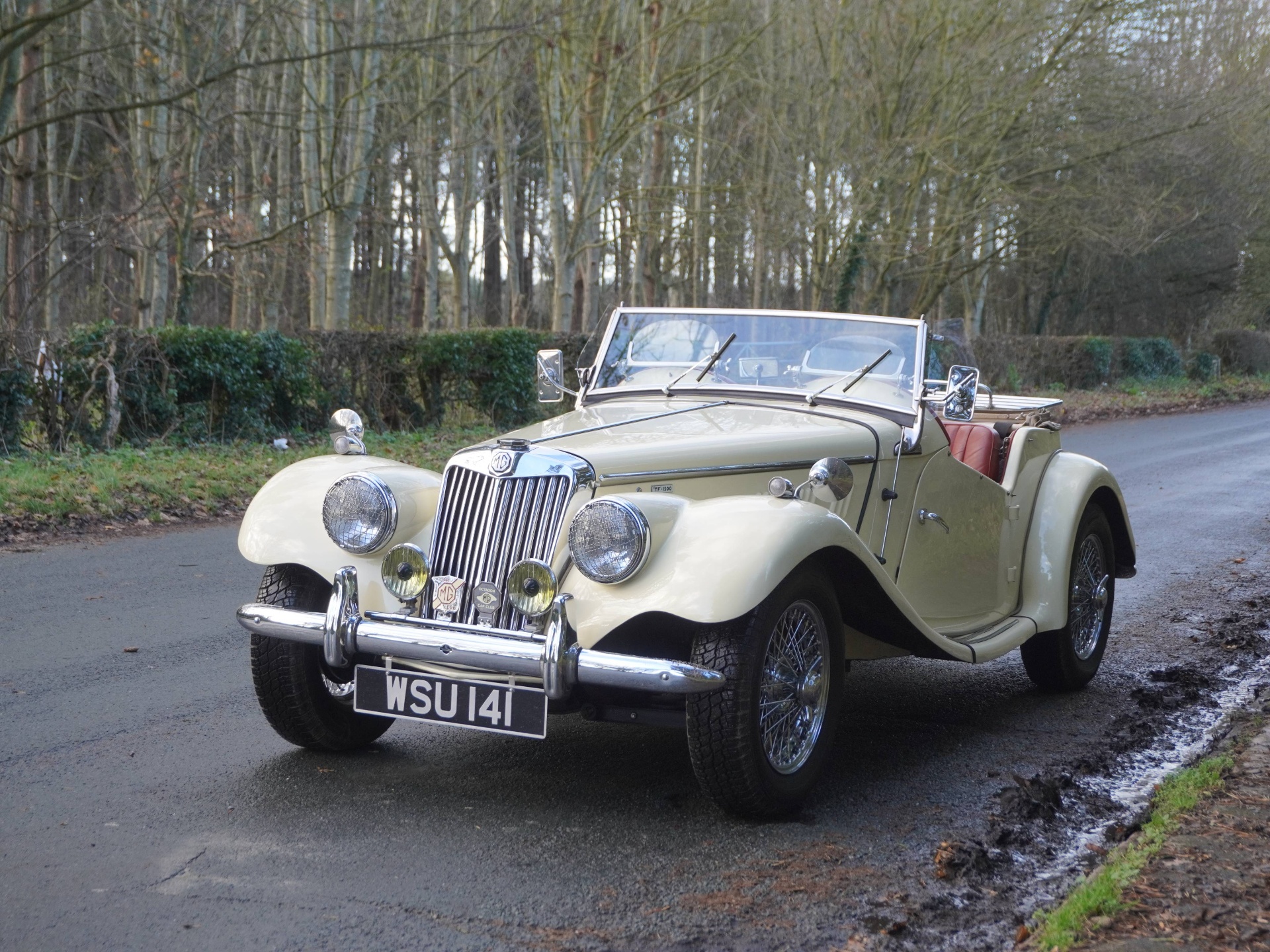
The last of the T-Series, launched at the 1953 Motor Show as a restyle of the TD with a raked, faired-in radiator grille, headlamps sunk into the wings and a lower bonnet line. Underneath it was largely the TD, which the press noticed. About 6,200 TF1250s were followed from late 1954 by roughly 3,400 TF1500s with the larger 1,466 cc XPEG engine. Production ended in 1955 when the modern MGA replaced it.
4. The modern MG TF (2002–2011), in brief
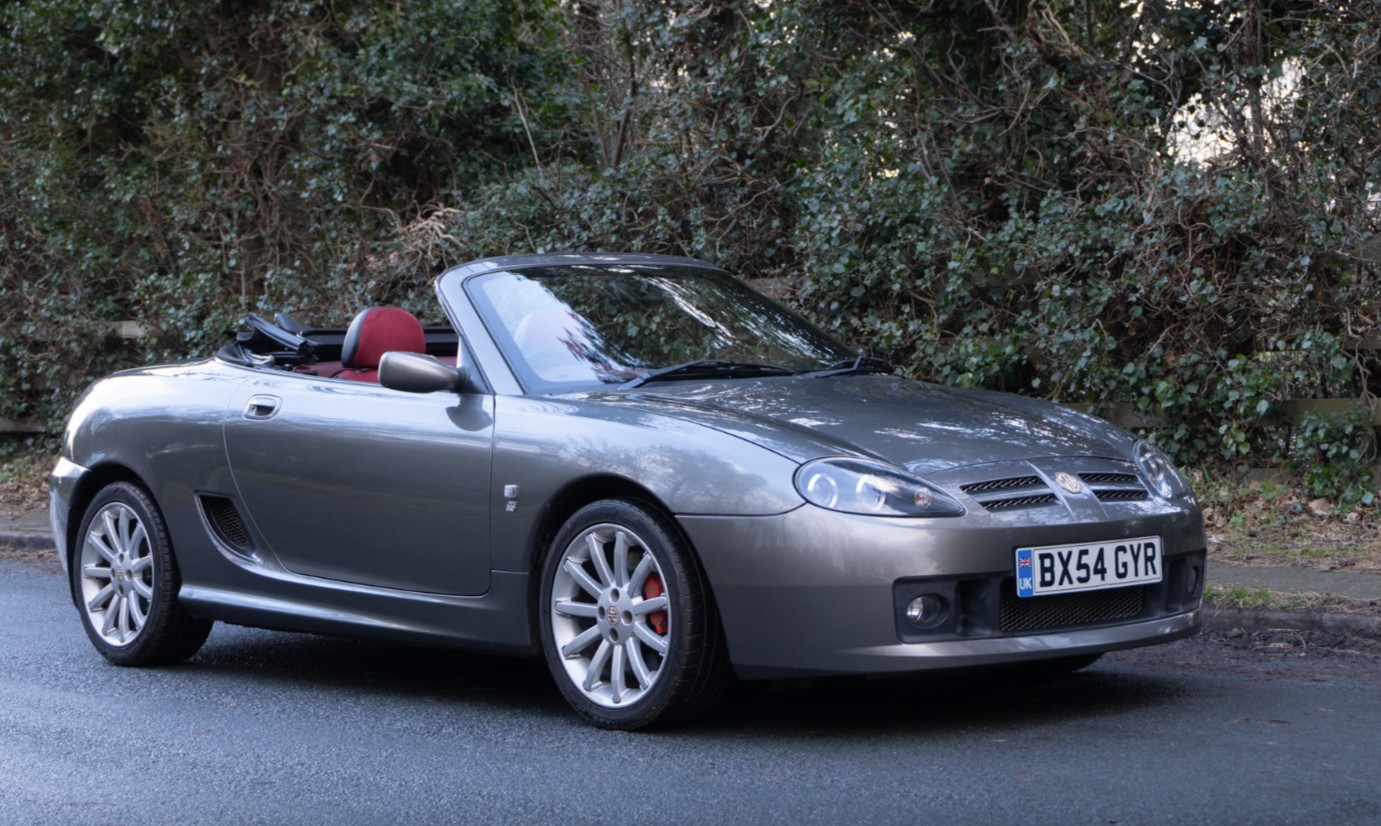
The modern TF descends from the MG F of 1995, MG's mid-engined roadster, which had used the unusual Hydragas suspension system. For 2002 the car was substantially re-engineered and renamed TF: Hydragas was replaced by conventional coil springs, a redesigned air-induction system and new camshafts lifted power, body torsional stiffness rose by around 20%, and the styling was revised front and rear.
Engines were the Rover K-Series in 1.6 and 1.8 litre forms, with models badged TF115, TF120, TF135 and TF160, the 160 using variable valve control. The car sold well: it outsold the Mazda MX-5 and Toyota MR2 in Britain, and was the first in its class to earn a four-star Euro NCAP rating.
Production was suspended in April 2005 when MG Rover collapsed. Around 39,000–40,000 cars had been built in the UK by then; sources differ slightly on the exact figure and we would rather say so than pick one silently.
Under Chinese ownership (Nanjing, later SAIC) production restarted at Longbridge in 2008, beginning with the limited-edition TF LE500, followed by the TF135 and a 50-car 85th Anniversary edition. These later cars used the revised N-Series engine, developed with Lotus Engineering, which addressed the K-Series' notorious head-gasket weakness. Only around 906 cars were built in this final phase before production ended for good in March 2011.
Honestly stated: the K-Series head gasket is the modern TF's best-known weak point, and the Chinese-built cars now command a premium among collectors as the first "new" MGs built in Britain after the collapse.
5. Which one do you actually have?
A short checklist for anyone genuinely unsure.
- Year on the V5. A registration document showing a year of manufacture between 1953 and 1955 is the classic. 2002–2011 is the modern car.
- Where is the engine? Under a long bonnet at the front, driving the rear wheels, classic. Behind the seats, ahead of the rear axle, modern.
- Look at the body. Separate flowing wings, running boards and an upright chrome radiator shell, classic. Smooth, integrated modern bodywork with a low nose and wind-up windows, modern.
- Check the chassis and engine numbers. The classic car's numbers and where to find them are covered in detail in Chassis & engine number identification.
6. The value gap
This is what most people are really asking. A classic TF is a collector's car typically worth £20,000 to £50,000 depending on condition and whether it's a 1250 or a 1500, see the Values & Price Guide for the full breakdown.
A modern TF is an affordable used sports car: usable examples can be found under £1,000, excellent British-built cars sit around £2,500, and the rarer Chinese-built LE500 and Anniversary cars command noticeably more.
Anyone researching "MG TF value" needs to establish which car they mean before any figure is meaningful.
7. Where to go next
This archive covers the classic T-Series in depth and does not cover the modern TF beyond this page. If the classic is what you were after, everything you need is a click away:
For the modern MG TF, we would honestly point readers toward the established MG owners' clubs and the MGF/TF enthusiast community online, they know that car far better than we do, and we would rather send you to people with real expertise than pretend to cover ground we don't.
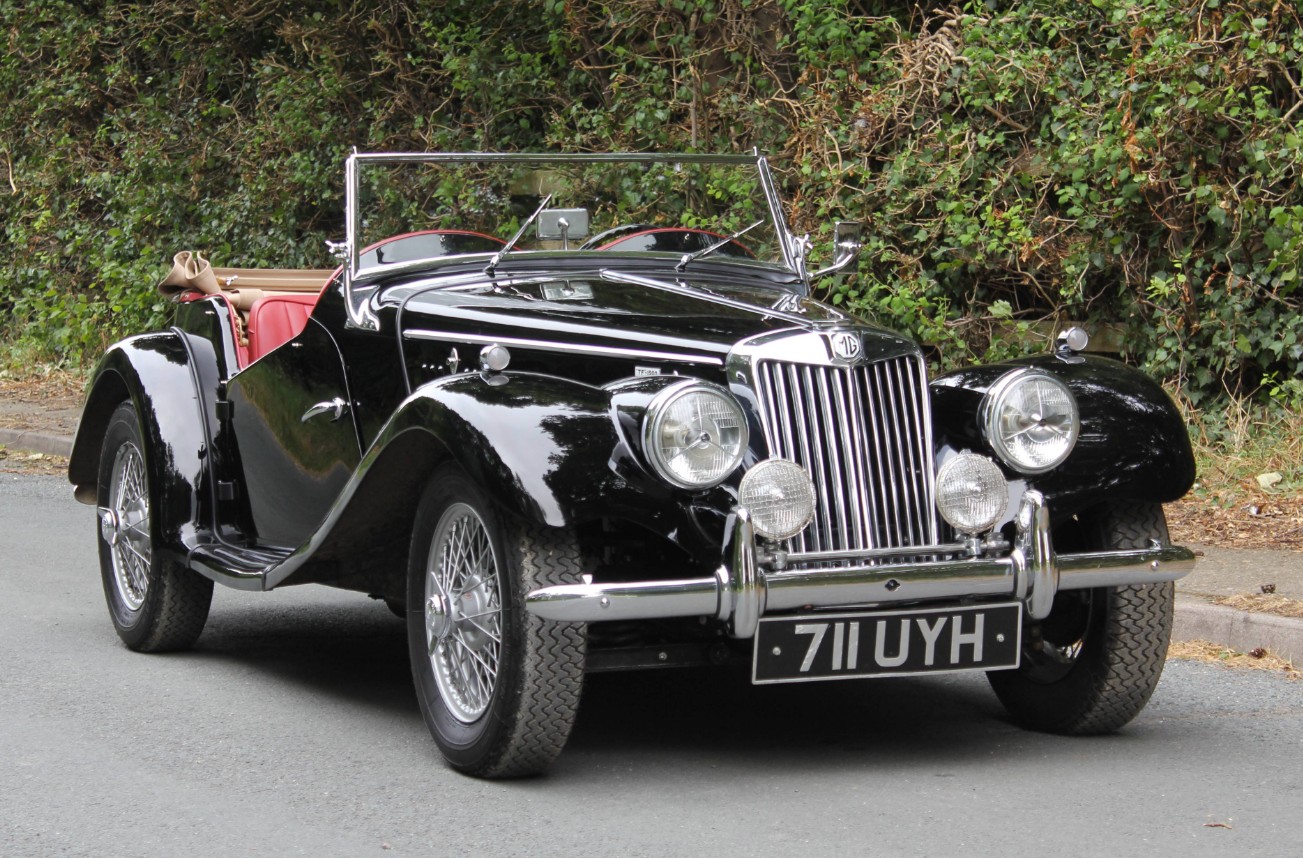
Owner photo, classic MG TF
Frequently asked
- Is the MG TF a classic car?
- There are two. The original MG TF (1953–1955) is unquestionably a classic, the last of MG's T-Series, built at Abingdon with an ash-framed body on a separate steel chassis. The modern MG TF (2002–2011) is a well-regarded mid-engined roadster built at Longbridge; it is now old enough to qualify as a modern classic, but it is a different car in every respect.
- What's the difference between the 1954 MG TF and the 2002 MG TF?
- Almost everything. The 1954 TF is a front-engined, rear-wheel-drive T-Series roadster with a 1,250 cc or 1,466 cc pushrod engine, a separate steel ladder chassis and an ash-framed body. The 2002 TF is a mid-engined monocoque sports car derived from the MG F, powered by the Rover K-Series 1.6 or 1.8. They share only the badge.
- Why do two MGs have the same name?
- When MG Rover updated the MG F in 2002 the revised car was renamed TF in deliberate tribute to the 1953–1955 MG TF Midget, a marketing choice, not a mechanical link. MG has a long habit of reviving heritage names (the Midget name was similarly revived), and it is the single most common source of confusion for people searching for either car.
- Is the MG TF mid-engined?
- The modern MG TF (2002–2011) is mid-engined, the Rover K-Series sits behind the seats, ahead of the rear axle, as on the MG F it descends from. The classic MG TF (1953–1955) is front-engined, with the XPAG or XPEG engine under a long bonnet driving the rear wheels.
- How much is an MG TF worth?
- It depends entirely on which car you mean. A classic TF is typically worth £20,000 to £50,000 depending on model and condition. A modern TF is an affordable used sports car, usable examples can be found under £1,000, with excellent British-built cars around £2,500, and the rarer late Chinese-built cars commanding more. See the Values guide for the classic ranges in detail.
- Which MG TF is the valuable one?
- The classic TF of 1953–1955. Around 9,600 were built, values sit in the tens of thousands for good cars, and prices for the TF1500 in particular have firmed over the last few years. The modern TF is a plentiful used car with a small collector premium only for the rare late Chinese-built LE500 and 85th Anniversary editions.