The distributor and timing do the clever work, but the spark still has to be made, carried and delivered — and fired to the right cylinder in the right order. Here is the rest of the ignition system, and how to read what it is telling you.
The coil — where the spark is made
The coil is a transformer. A low-voltage primary winding builds a magnetic field; when the points break that circuit the field collapses and induces tens of thousands of volts in the secondary winding — the spark. One detail catches people out: many cars use a ballast resistor, so the coil runs on a reduced voltage in normal running but gets full battery voltage while cranking, for a fatter spark when starting. The classic sign of ballast trouble is an engine that fires while the key is held at start but dies the instant you let it back to the run position. If you ever replace a coil, it must match the system — a ballasted car needs a ballast coil, or it will run hot and burn its points.
HT leads — carrying the spark
The high-tension leads carry that high voltage from the coil to the distributor cap, and from the cap to each plug. Traditional leads use a copper core in a woven cotton or braided sleeve; many modern replacements use a carbon or silicone core for suppression. They lead a hard life — heat, vibration and damp — and perished or cracked leads let the spark leak to earth, especially in the wet, giving a misfire that comes and goes. A tell-tale is faint blue tracking visible across the leads or cap in the dark with the engine running. Keep them clean, routed away from hot metal, and in firing-order sequence.
The spark plug — and how to read it
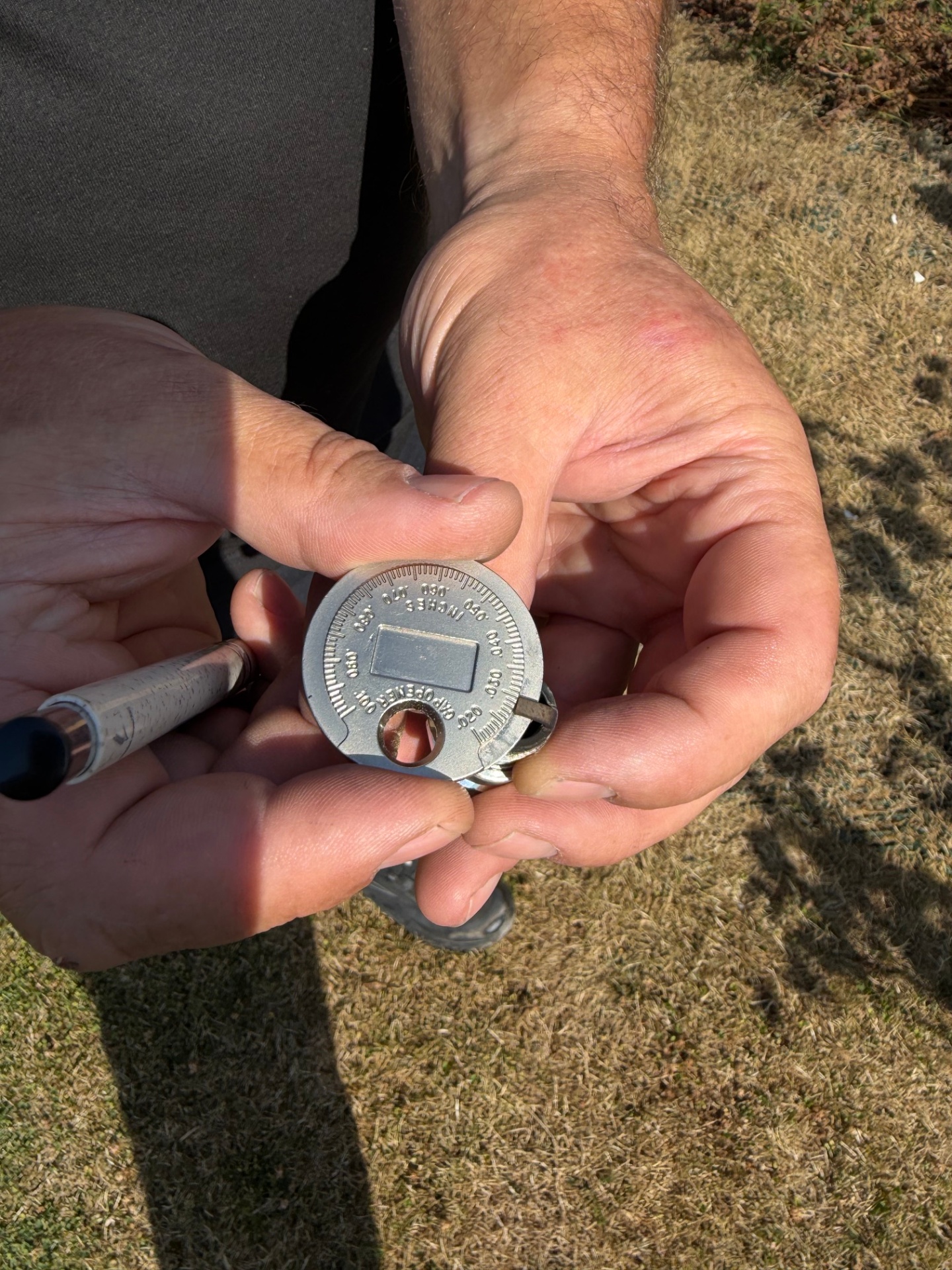
The plug screws into the combustion chamber and lets the spark jump a set gap between its centre and earth electrodes. Two things matter in choosing one. Heat range is how quickly the plug sheds its heat: too cold and it fouls up with deposits; too hot and it can glow and cause pre-ignition. Use the heat range the manual specifies. The gap sets how far the spark jumps: too small and the spark is weak; too large and the coil may not fire it cleanly, causing a misfire — so set it to the book figure with a feeler gauge.
Reading a plug
A plug is a free diagnostic once the engine is warm and has been driven. A light tan or grey firing tip is spot on. Dry black sooty deposits mean the mixture is too rich (or the plug is too cold, or timing retarded). A wet, oily tip points to oil getting past rings or valve guides. A white or blistered tip, or eroded electrodes, warns of running too hot or too weak, or timing too advanced. Pull all four and compare them — an odd one out points straight to that cylinder.
The firing order — and why it matters
The four cylinders do not fire one-two-three-four along the block; on the XPAG they fire 1, 3, 4, 2. This sequence is chosen to spread the power strokes evenly around the crankshaft and to balance the loads, for smooth running. The distributor delivers it: the order in which the rotor reaches each cap terminal, and therefore the order the HT leads run to the plugs, must follow 1-3-4-2. Get one pair of leads swapped and the engine will kick back, refuse to start, or run horribly — so when leads come off, mark them, and always rebuild in firing order, turning the right way (the distributor rotates in a fixed direction, given in the manual).
Where it all comes together
Coil, leads, plugs and firing order are the delivery half of ignition; the distributor and timing are the control half. Get all of it right — a healthy spark, clean leads, the correct plugs gapped properly, fired in order and timed correctly — and the ignition side is done. Then, and only then, you set the fuelling.
With thanks to Andrew at AG Classic Car Tuning, mobile classic-car tuning specialists in North Yorkshire.