A classic runs on the settings a human being gives it, not a computer. Carburettors and ignition interact constantly, so getting them right is a craft built on experience and a trained ear. A proper professional tune-up typically transforms starting, smoothness, throttle response, economy and running temperature, often for less than the cost of the parts people buy instead.
*Transparency: this is an independent recommendation based on my own experience of having AG Classic Car Tuning tune my 1954 MG TF1500. It is published with permission and with no payment, commission or other arrangement involved.*
What "tuning" means on a classic (and what it doesn't)
If you have come to a T-Series from a modern car, the word "tuning" carries the wrong associations. There is no remap. There is no laptop plugged into a diagnostic port. There is no ECU quietly correcting for a setting that is slightly off. Everything the engine will do on the road is decided by physical adjustments made with spanners, screwdrivers, feeler gauges and a strobe, and by the person making them.
On a car like an MG T-Series, tuning means physically setting the mechanical systems that govern how the engine breathes and how it fires. On the fuelling side that is float level, jet position, mixture and the airflow balance between the two carburettors. On the ignition side it is points gap, dwell, static timing, total advance, spark plug condition and gap, and idle speed. Whatever is set is what the engine lives with. There is no computer to smooth over a poor setting, and no warning light to tell you that combustion is happening ten degrees too late.
That is why "a good tune-up" and "a bad tune-up" produce cars that feel like different vehicles.
Why it's a skill, not a checklist
The heart of the matter is that every adjustment interacts with every other adjustment. Advance the ignition and the mixture requirement shifts. Richen one carburettor and the balance between it and its partner changes. Alter idle speed and the mixture reading at idle changes with it. Fit a fresh set of plugs and the whole engine responds slightly differently to the settings that were correct for the old ones.
A manual can give you the numbers, and it is a good starting point. But the numbers in the manual assume a car in factory condition, and no seventy-year-old car is in factory condition. Real cars have worn throttle spindles that let air in where it should not, tired distributor springs that no longer pull the advance back cleanly, non-standard camshafts, mildly warped manifolds, modern fuel that behaves differently from what the factory tested with, exhausts that are not quite the specification they were, and their own long list of small quirks accumulated over decades.
An experienced tuner reads what the engine is actually telling them, by ear, by the exhaust note, by the way the throttle picks up, by the reading on an airflow meter, by the colour of a spark plug electrode and the feel of a lifting pin, and works to what that engine wants, not what the book said a new one wanted. That judgement is what you are paying for, and it cannot be downloaded, watched on a video, or bought in a kit of parts.
Modern fuel makes it matter more
The petrol these cars were designed around no longer exists. Modern unleaded pump fuel contains ethanol, commonly around five per cent in E5 super-unleaded and up to ten per cent in standard E10, and ethanol is chemically different from the hydrocarbon fuel the SU jets were sized to run on. It carries less energy per litre, it holds water, it can attack older rubber and cork components, and it changes the way fuel evaporates in a hot inlet manifold.
Practically, that means mixture settings that were correct on 1954 petrol are often slightly weak on today's fuel, and the hot-running behaviour of a T-Series can be different from what the workshop manual describes. A specialist working on classics day in and day out has already made those adjustments a thousand times and knows what to expect. It is another reason the numbers in the book are a starting point, not the destination.
For more on how modern petrol affects a T-Series and what to do about it, see the SU Type H Carburettors complete guide{target="_blank"}.
What you actually gain
A proper tune-up on a healthy T-Series usually transforms the car. What you notice, roughly in the order the driver feels it:
- Reliable starting, hot and cold. The car catches on the first or second turn from cold, settles quickly, and does not sulk when restarted hot at a fuel station or a show.
- A steady, even idle. No hunting, no dying at junctions, no need to blip the throttle to keep it alive while you wait at a set of lights.
- Crisp throttle response. The flat spots go. The car pulls cleanly from low revs, picks up smartly when you open the throttle, and no longer stumbles on a light throttle in traffic.
- Better fuel economy. A correctly-set engine is not pouring petrol away as unburnt fuel or wasting energy through late combustion. Improvements of several miles per gallon are common on a car that was previously running rich or retarded.
- Lower running temperatures. Badly set ignition is one of the most commonly missed causes of overheating on a classic. Correct timing and advance, and correct mixture, take heat out of the exhaust port and out of the water jacket. See the cooling article{target="_blank"} and the distributor article{target="_blank"} for why.
- Less long-term wear and damage. This is the point owners under-value. A chronically weak mixture burns valves. Chronically retarded timing overheats pistons and thins oil. Chronically over-advanced timing hammers bearings. A car that is set up correctly is not just nicer to drive, it is being protected.
The economic point is worth making plainly. A tune from a good specialist typically costs less than one wrongly-diagnosed replacement part. Owners routinely spend hundreds of pounds on radiators, water pumps, thermostats, cores, hoses, electric fans and carburettor kits chasing a problem that a competent tuner resolves in an afternoon with correct settings and a screwdriver. If the car has never been set up properly, that is almost always the first thing to do, before, not after, buying parts.
When to DIY and when to call someone
This is not a piece arguing that owners should not touch their own cars. Quite the opposite. Every T-Series owner ought to be able to check points, plugs and static timing, top up SU damper oil, do a lifting-pin test and balance the carburettors on a warm engine. Doing that work is part of the pleasure of the car, and it is what will keep a good tune in tune.
Our own guides cover this ground in detail. Start with the complete tune-up guide{target="_blank"}, the SU Type H carburettors complete guide{target="_blank"} and the ignition and charging article{target="_blank"}. If you can follow those confidently, you can maintain a well-set-up car for years.
Call a specialist when:
- The car has never run right in your ownership and you have no idea what its baseline is.
- You have adjusted everything, several times, and it is still not right.
- You have twin (or triple) carburettors that will not balance no matter what you do.
- The car overheats or lacks power and there is no obvious mechanical cause.
- You have just fitted new carburettors, a rebuilt distributor, new ignition parts or done any significant engine work and need a proper baseline to work from.
- You simply want the car set up perfectly once, by an experienced hand, so you have a known-good reference to maintain.
A specialist worth knowing: AG Classic Car Tuning
I have used a number of tuners over the years. The one I recommend to other T-Series owners, and the one who tuned my own 1954 TF1500, is Andrew Grabowski of AG Classic Car Tuning. What follows is what any owner considering him should factually know.
Who and where. Andrew trades as AG Classic Car Tuning and is based in Kirkbymoorside, North Yorkshire. The strapline on his van, *"Old school tuning… for old school cars!"*, is a fair description of the work.
Mobile, which matters for classics. Andrew is a genuinely mobile tuner. He travels to the client wherever they are. For classic owners that is a real practical advantage: there is no need to make a risky journey in a car that is not running properly, and the car is set up where it actually lives and cold-starts, which is where the settings have to work. He also offers garage-based support for owners who prefer to bring the car to him.
Range of work. Carburettor and distributor classics broadly from the 1930s to the 1990s. On the fuelling side, all SU carburettors, HS2, HS4, HS6, HS8 and HIF types, plus Weber, Stromberg, Solex and Zenith. Marques include MG, Mini, Morris, Austin, Ford, Triumph, Jaguar and other British classics. For T-Series owners, twin SUs and a Lucas distributor are exactly his everyday work.
Carburettor overhaul as well as tuning. Andrew also services, overhauls and reconditions carburettors of all makes. On a T-Series that matters, because worn throttle spindles, tired needles and hardened jet seats cannot be adjusted around, they need putting right. Being able to have the same person overhaul the carburettors and then set them up on the car is unusual and useful.
He'll teach you. His own website openly invites owners to watch and learn, there is a page headed *"Can I watch? Can you teach me?"* That willingness to work with the owner looking on, explaining what he is doing and why, is unusual in this trade and a good sign of confidence. For many owners the education is worth as much as the tune.
Practical, transparent. He publishes current pricing, has an enquiry form on the site, offers guidance on how to prepare a car for tuning, and gives a realistic idea of how long a tune takes. He advises booking early, the run-up to the show season fills quickly.
Beyond the day job. Andrew attends classic shows and track days, works with classic car auctions, and supports charity. His chosen causes for 2026 are Macmillan Cancer Support and Martin House Children's Hospice; he raised £1,100 for Macmillan in a single day of tuning Minis at Blyton Park in May 2026.
Contact.
- Andrew Grabowski, AG Classic Car Tuning
- Kirkbymoorside, North Yorkshire
- 07500 103227
- andrew@classic-car-tuning.com
- www.classic-car-tuning.com{target="_blank"}
None of the above is a paid placement. It is an editorial recommendation from one enthusiast to another, published with Andrew's permission.
Case study: tuning a 1954 MG TF1500
What follows is my own experience of having AG Classic Car Tuning work on my 1954 MG TF1500. The photographs were taken during the visit and are published with permission.
The car before the tune. *[Owner note, fill in: how the car started from cold and hot, what the idle was like, whether it hunted or died at junctions, how the throttle responded off-idle, any flat spots, any tendency to run hot, fuel consumption and any other symptoms you had learned to live with.]*
What was found on the day. *[Owner note, fill in: what Andrew found when he went through the ignition and fuelling, points condition, static and total advance readings, distributor behaviour, mixture as it stood, balance between the two carburettors, jet centring, damper condition, plug colour, anything about the car's history that came out during the work.]*
What was adjusted. *[Owner note, fill in: what was changed and to what settings, timing, mixture, balance, idle speed, damper oil, any advice on the car's condition and what to keep an eye on.]*
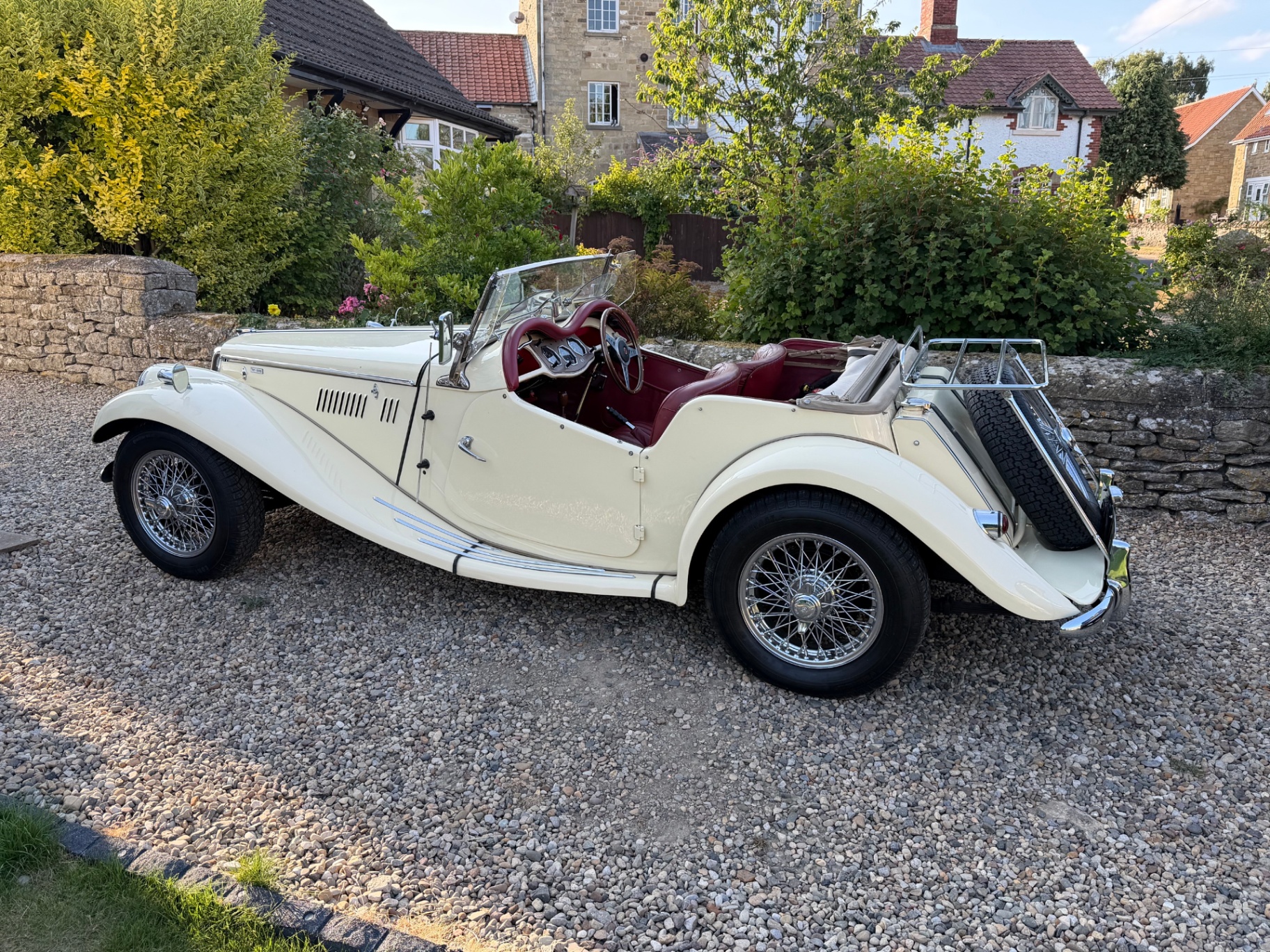
The car after the tune. *[Owner note, fill in: how the car started, idled, pulled, and behaved on the road afterwards, any change in running temperature, any change in fuel consumption, and your overall impression of the difference.]*
I have deliberately left this section factual rather than florid, the details are what make it credible.
Getting the best from a tune-up (preparation)
A tuner can only set up what is mechanically sound. Getting the car ready properly before the visit is what turns a decent tune into a very good one.
- Mechanically sound first. A tuner sets an engine up; he cannot tune out worn throttle spindles, a blown head gasket, poor compression, a badly worn distributor, perished fuel lines or a collapsed exhaust. Have the obvious mechanical health of the car checked first. Our compression testing article{target="_blank"} covers the first check to do; the distributor article{target="_blank"} covers what a tired distributor looks like.
- Accessible. Have the car somewhere with room to work around it, level ground, and access to a mains socket if possible. On a mobile visit that matters more than owners expect.
- Know your history. Anything you know about what has been done to the car, rebuilds, replacement carburettors, non-standard camshafts, changed exhaust, changed distributor, is useful. Say so at the start. It shortens the diagnostic time considerably.
- Cold to start with. Have the car cold when the tuner arrives. Cold-starting behaviour is one of the things you want set up properly, and it can only be assessed once.
- Be honest about symptoms. "It hunts at idle when hot", "it pinks at 2,500 in third", "it uses more fuel than it used to". Small, specific observations from the person who drives it are gold to a tuner.
- Ask questions. A good tuner will happily explain what he is doing and why. Take advantage of it. Every question answered is a repair or an adjustment you will not need to pay for later.
Afterwards
The good news about a properly set-up carburettor and distributor classic is that a good tune stays good. SU carburettors in particular hold their settings remarkably well once they are right; the job afterwards is maintenance, not re-tuning.
Sensible routine care:
- Keep the SU dashpot damper oil topped up. It matters more than owners realise.
- Service the points and plugs at the recommended interval and check gaps rather than replacing on a whim.
- Keep an eye on the distributor cap, rotor arm and HT leads, see the distributor article{target="_blank"} for why this matters more than it seems.
- Do not "adjust" things unless you have a reason. The settings a good tuner leaves you with are a reference point. Return to them; do not drift away from them.
If you are new to this, work through the complete tune-up guide{target="_blank"} at your own pace. If you want the car set up perfectly once, and you are in reach of North Yorkshire, you now know who I would call.
For the wider directory of specialists in this network, see Parts & Specialists{target="_blank"}.
Frequently asked questions
Is professional classic car tuning worth it?
For most owners, yes. A competent classic-car tuner will usually transform starting, idle, throttle response, fuel economy and running temperature in a single session, and the cost is often less than one wrongly-diagnosed replacement part. The value is the judgement, an experienced ear and eye reading what your specific engine wants, not what a manual said a factory-fresh one wanted seventy years ago.
What does a classic car tune-up involve?
On a carburettor and points classic it means physically setting the mechanical systems that govern how the engine breathes and fires: points gap and dwell, ignition timing (static and total advance), spark plug condition and gap, carburettor float levels, jet position and mixture, airflow balance between carburettors, and idle speed. There is no ECU or laptop, every setting is made by hand and by ear.
How often should a classic car be tuned?
Once a car has been properly set up, SU carburettors in particular hold their settings well and the job becomes maintenance rather than re-tuning. A full professional tune every two to three seasons is plenty for most cars, with routine servicing of points, plugs and damper oil in between. Book a fresh tune after major work, new carburettors, a rebuilt distributor, or a rebuilt engine.
Can a tune-up stop my classic overheating?
Often, yes. Badly set ignition, retarded timing or a distributor that is not advancing fully, is one of the most commonly missed causes of overheating on a classic. Combustion continues past the point the exhaust valve opens and the water jacket has to absorb heat it was never designed to take. Getting the timing and mixture right frequently fixes an overheating problem that owners had been trying to solve with radiators and pumps.
Can I tune SU carburettors myself?
Yes, up to a point, and every T-Series owner should learn the basics, checking damper oil, lifting the piston test, jet centring, and balancing with a simple airflow meter. Call a specialist when the car has never run right and you have no known-good baseline, when twin carburettors will not balance, when you have just fitted new carburettors or a distributor, or when you want the car set up perfectly once so you have a reference to maintain.
Is there a mobile classic car tuner in Yorkshire?
Yes. AG Classic Car Tuning, run by Andrew Grabowski from Kirkbymoorside in North Yorkshire, is a mobile classic car tuning specialist who travels to the client. He works on carburettor and distributor classics broadly from the 1930s to the 1990s, all SU types plus Weber, Stromberg, Solex and Zenith, on MG, Mini, Morris, Austin, Ford, Triumph, Jaguar and other British marques, and also services and overhauls carburettors. Contact 07500 103227 or andrew@classic-car-tuning.com.