Built at Abingdon from 1936 to 1955, the MG T-Series ran from the TA through the TB, TC, TD and TF. Interrupted by a war that turned the factory over to tanks and aircraft parts, it returned in 1945 to become Britain's first great export sports car, and the machine that taught America to love the roadster.
The T-Series timeline
1936 – 1955 · tap a marker to explore
1936, MG TA, the series begins
3,003 built · £222 new
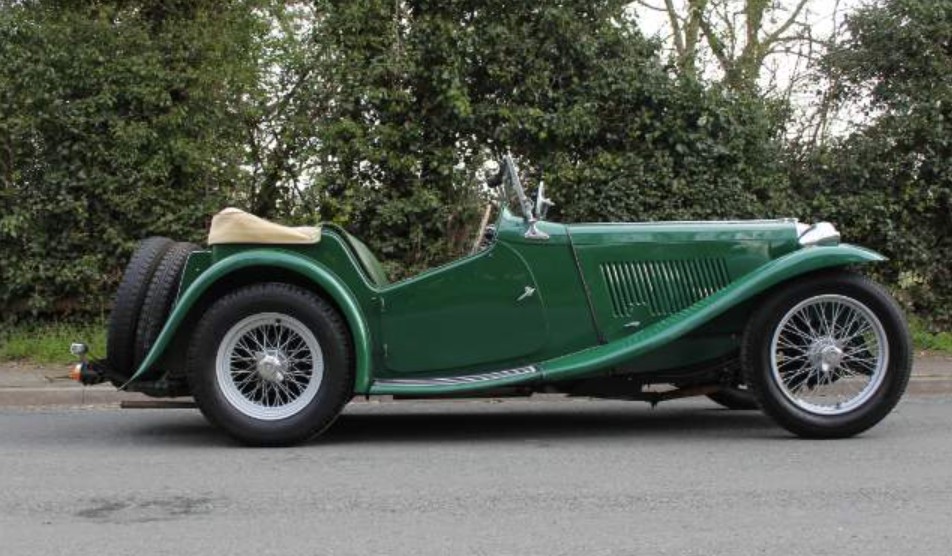
Bigger, more comfortable and pushrod-powered, the TA opened the T-Series in 1936. It was originally called simply the 'T Type', the name TA only came into use once the TB arrived. Steel body over ash frame on a separate chassis.
Abingdon: the cottage industry
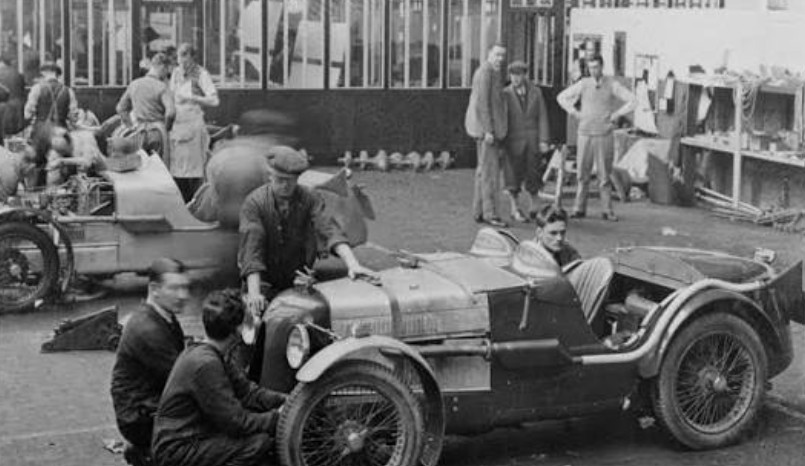
MG's home was a former leather works on the edge of Abingdon-on-Thames, small by any Detroit standard. There was virtually no automatic machinery and no moving assembly line: cars were manhandled from station to station on twin tracks, right up until the plant closed in 1980. In the 1930s perhaps fifty finished cars a week trickled out through the gates.
That matters to everything else in this story. The T-Series was never a mass-produced machine. It was hand-built in a small factory that punched extraordinarily above its weight, and the intimacy of that operation is why the cars survive as well as they do, why individual chassis quirks are so pronounced, and why the marque earned the loyalty it did.
1936: the TA arrives
The T-Series begins. The TA replaced the overhead-cam Midgets that came before it, and it did so by being bigger and more comfortable, which the purists grumbled about at the time and have not entirely stopped grumbling about since. A four-speed gearbox with synchromesh on the top two ratios, a cork-faced clutch running in oil, hydraulic brakes with nine-inch drums, and around 80 mph flat out with a leisurely 0–60 time of 23.1 seconds.
The construction, steel body panels tacked to an ash timber frame, the whole assembly bolted to a separate steel chassis, would define the entire T-Series from that day to the last TF 1500 nineteen years later. It also explains why every buying guide since has begged owners to check the wood, not the paint.
Originally called simply "the T Type," the car we now know as the TA only picked up the extra letter when the TB arrived in 1939.
1939: the TB and the engine that mattered
The TB is short but pivotal. Externally almost indistinguishable from a late TA, it introduced a new engine, the XPAG, that would power the T-Series to the very end and go on to serve the MG Y-type saloon. Then the war stopped production almost immediately, making the TB the rarest of the entire line.
MG at war
This is the section most T-Series histories skip, and it is a shame, because what happened at Abingdon between 1939 and 1945 is one of the most surprising chapters in British motoring.
At the outbreak of war the factory was cleared for war work, a job the general manager described as a sad one, since dismantling the plant felt like destroying the ability to build MGs at all. The work that followed ranged from the mundane to the extraordinary. Ammunition racks and small pressings came out of the presses. Carden-Lloyd tanks arrived for overhaul, then heavier Matilda tanks. There was a shop making spars for Hawker Tempests. Guns were serviced. American Lend-Lease trucks turned up at the docks in vast wooden crates, the trucks assembled at Abingdon, and the crates carted back and used to build the frame of an enlarged pressing shop.
Armoured cars were repaired at Abingdon and then tested on the Berkshire Downs, where the drivers had to dodge flour sacks dropped by RAF crews practising bombing runs over the same ground. MG almost won a contract to recondition Spitfire machine guns, only to lose it when an official realised the factory had no firing range on which to test them. And they made so many tank dipsticks that the general manager reckoned every British tank must have carried a couple of dozen MG ones by the war's end.
Abingdon's small size and its location outside Oxford spared it from bombing, so MG was among the first British makers back in business when peace came. The body tooling for the prewar cars, though, had been made at Morris Bodies in Coventry, and Coventry did not survive so well.
1945: the TC and "Export or Die"
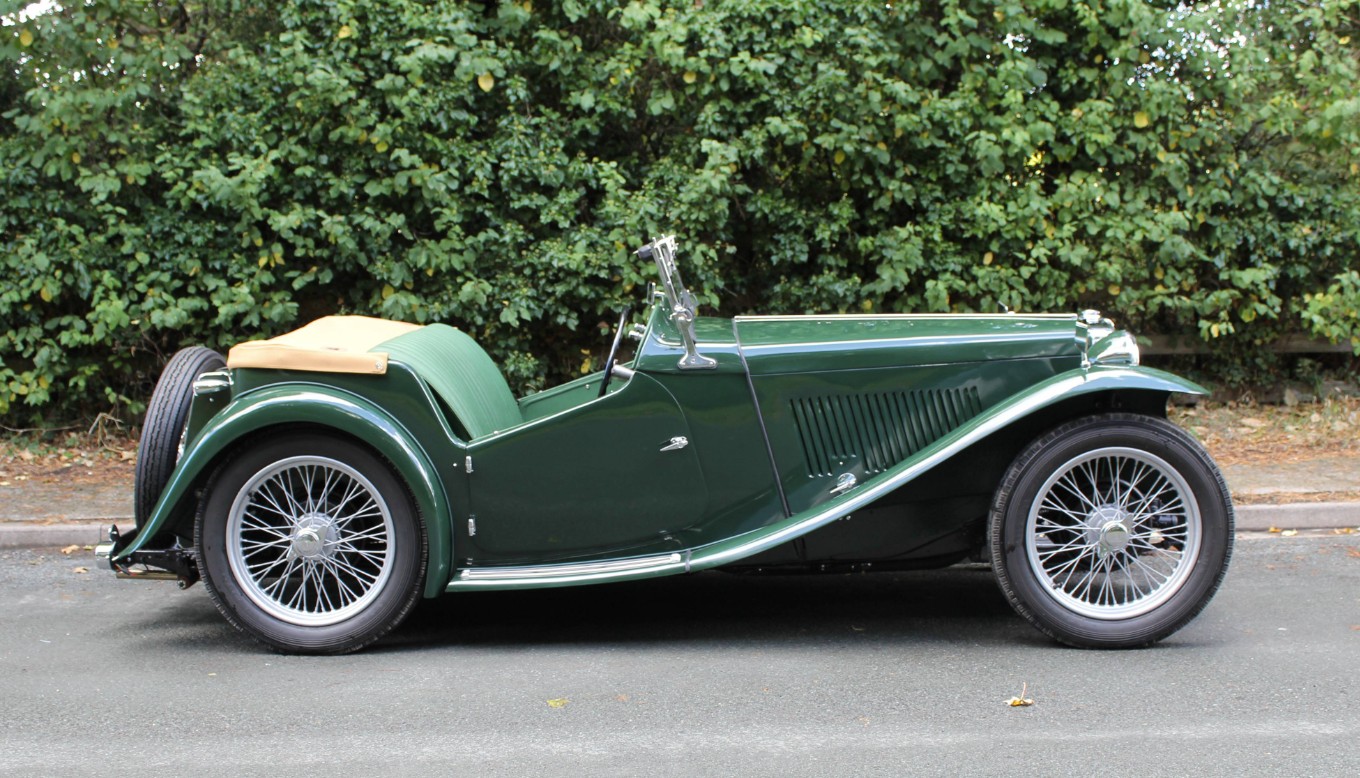
Britain's economy was in ruins. The government demanded exports above all, and steel was rationed according to how much a maker sold abroad. MG's answer was quick, pragmatic and famously conservative: take the prewar TB, widen the body by four inches, replace the sliding trunnion spring mountings with rubber-bushed shackles, a change forced by material shortages that happened to simplify maintenance, and put it back into production.
The first TC came off the line on 17 September 1945. It was antiquated even when new: no bumpers, no heater, right-hand drive only, side curtains instead of wind-up windows, a hood that felt like a scout tent in a shower, and skinny 19-inch wire wheels. It was also, somehow, exactly the right car at exactly the right moment.
The servicemen and the sports-car boom
The story is usually told like this: troops from all over the world were billeted in Britain during the war and fell in love with the little MGs they encountered; when they went home they wanted one, and the returning American serviceman became the mythic founder of the US sports-car boom.
The truth is more interesting. Historians including David Knowles have pointed out that the idea of American servicemen as the first to embrace MG is largely a myth, the TC's earliest overseas breakthroughs actually came in Australia and other Commonwealth markets. Returning servicemen from across the Empire, not only the USA, created the demand.
What is beyond dispute is the effect on America once the cars did arrive. Of the TC's 10,000 cars, 6,593 were exported: some 2,000 went to the USA through official channels, with perhaps 1,500 more brought in privately, including by servicemen shipping cars home personally. With the TD the flood became a torrent, of 29,664 built, around 23,500 crossed the Atlantic.
Why did it land so hard? American showrooms in 1946 were full of large, soft, heavy saloons. The MG was tiny, spartan and slow in a straight line, but it went precisely where it was pointed and it did not wallow. As one period summary put it, in an MG the driver was the boss, not the car. Americans had simply never driven anything like it.
America goes racing
The consequences were immediate. Owners formed clubs and went racing. The Sports Car Club of America, founded in 1944, began sanctioning road races in 1948. At the inaugural Watkins Glen Grand Prix that year, eight of the fifteen starters were MG TCs, and all eight finished. The following year eighteen TCs lined up in a field of forty-three, in front of a crowd that had grown to around 50,000. By 1950 attendance topped 100,000; by 1951, more than 200,000.
An entire generation of American racing drivers learned their craft in T-Series MGs. The sports-car craze the TC and TD ignited is credited with helping inspire Detroit's own response, the first Chevrolet Corvette of 1953.
1950: the TD, the one that sold
The big modernisation. A shortened Y-type-derived chassis with independent front suspension and rack-and-pinion steering. A wider body. Bolt-on pressed-steel disc wheels in place of the wires. Bumpers front and rear for the first time. And, crucially, left-hand drive for export.
Road testers loved the improved ride. Diehards muttered that the T-Type had gone soft. It did not matter: the TD outsold every MG that had come before it, and it made MG a household name in America.
1953–55: the TF, a beautiful last stand
The TF is the restyle that gave the T-Series its prettiest face, the radiator grille faired in and raked back, headlamps sunk into the wings, a lower bonnet line and a sloping tail. Underneath, though, it was still very much the old car, and the press of the day knew it.
Late in 1954 came the final answer to the power complaint. The XPAG was bored to 1,466 cc as the XPEG, giving around 64 bhp, and badged TF1500. There is a real poignancy to it: the prettiest T-Type was also the one whose time had run out.
1955: the end of an era
The MGA arrived with a modern full-width body, and nineteen years of coachbuilt, ash-framed, upright MG Midgets came to an end. Something was undoubtedly lost, the intimacy, the outline, the sense of a car built one at a time by people who could still remember doing it before the war.
But something else survived. The T-Series is today among the most cherished and best-supported British classics, with an exceptional survival rate. The parts network, the club scene and the depth of knowledge you can call on as an owner in 2026 are, in real terms, better than at any point since the cars were new.
The T-Series on screen and in popular culture
The T-Series has been quietly stealing scenes for eighty years.
Hi-de-Hi! (BBC, 1980–88)
The best-loved British example, and worth telling in full. Squadron Leader the Honourable Clive Dempster DFC, played by David Griffin, arrived at Maplin's holiday camp for the 1960 season (series 6–9, 1984–88) as the new Entertainments Manager. Aristocratic, RAF war hero, DFC-decorated for leading night raids over Germany, a maverick and a ladies' man who drank cocktails rather than beer. He drove a red MG TC convertible.
The casting of the car is perfect. By 1960 a TC was already a decade-and-a-half old, exactly the slightly-worn, glamorous, ex-service-officer's car such a character would have kept. It is the neatest possible illustration of the T-Series' association with the wartime officer class.
On the big screen
- The Man in the White Suit (1951), Alec Guinness and Joan Greenwood, with an MG TC.
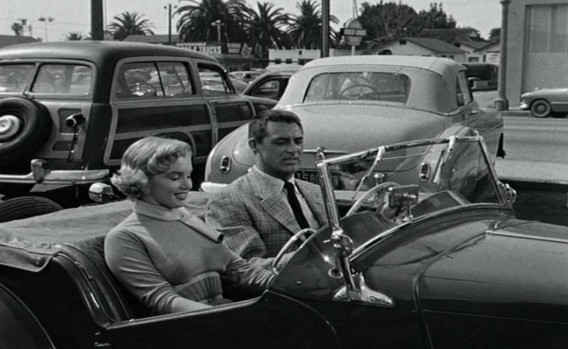
- Monkey Business (1952), Howard Hawks' comedy with Cary Grant and Marilyn Monroe, featuring an MG TD.
- Abbott and Costello Go to Mars (1953), an MG TD appears amid a New Orleans Mardi Gras parade.
- Knock on Wood (1954), a red MG TD in a Danny Kaye chase sequence, the little MG weaving through traffic among vast American cars for comic effect.
- Pillow Talk (1959), Rock Hudson memorably struggling to fold himself into and out of an MG TD.
- The Beverly Hillbillies, a right-hand-drive MG TC cameo in the second-season episode "Jed Foils a Homewrecker."
- Funny Farm (1988), Chevy Chase arriving at his rural retreat in an MG TF.
The Internet Movie Cars Database lists well over two hundred appearances for the TD alone and more than 150 for the TF. If you have spotted a T-Type on screen we have missed, we would love to hear about it, send it in via the contact page.
Did you know?
- The TA was originally sold as simply "the T Type", the "TA" name only came in once the TB arrived in 1939.
- The TC was never officially made in left-hand drive, yet became the founder car of the American sports-car boom.
- The toolboxes fitted to later MG roadsters were surplus wartime pressings, and the enclosed battery box in the TC and Y-type was born of running out of ammunition boxes.
- Eight of the fifteen starters at the first Watkins Glen Grand Prix in 1948 were MG TCs, and all eight finished.
- Roughly four out of five TDs, around 23,500 of 29,664, were exported to the USA.
- The "TF" name was controversially reused in 2002 on a completely unrelated mid-engined car, which is still confusing owners today.
- MG made so many tank dipsticks in the war that the general manager reckoned every British tank had two dozen of them.
Where to go next
- The full model-by-model breakdown of the T-Series lineage, from TA to TF 1500.
- Practical chassis and engine number identification if you're checking the numbers on a specific car.
- The pillar article on the T-Series body, ash frame, steel panels and how to keep them alive.
- The community Registry, add your own car to the record.
Frequently asked questions
What years was the MG T-Series made?
The MG T-Series was built at Abingdon from 1936 to 1955, running from the TA through the TB, TC, TD and TF (including the TF 1500 of late 1954). Production stopped from 1939 to 1945 while the factory was turned over to war work.
Why did American servicemen buy MG TCs?
The popular story credits American servicemen billeted in wartime Britain with starting the US sports-car boom. The truth is more nuanced, historians note that the TC's earliest overseas success actually came in Australia and other Commonwealth markets, but returning servicemen from across the Empire did drive real demand, and of the TC's 10,000 cars, some 2,000 reached the USA through official channels with perhaps 1,500 more brought in privately.
What did the MG factory do during the war?
From 1939 the Abingdon plant was cleared of car production. It overhauled Carden-Lloyd and later Matilda tanks, produced spars for Hawker Tempests, serviced guns, assembled Lend-Lease trucks that arrived in vast wooden crates (later reused to frame an enlarged pressing shop), and made ammunition racks, small pressings and tank dipsticks in enormous numbers.
Which MG appeared in Hi-de-Hi?
A red MG TC convertible driven by Squadron Leader the Honourable Clive Dempster DFC, played by David Griffin, from series 6 (1984) onwards. By the show's 1960 setting a TC was already a decade-and-a-half-old car, exactly the slightly-worn, glamorous, ex-service-officer's roadster the character would have kept.
How many MG TCs were made?
10,000 MG TCs were built between September 1945 and November 1949. 6,593 of them were exported, roughly 2,000 to the USA through official channels with perhaps 1,500 more brought in privately.
What replaced the MG T-Series?
The MGA, launched in 1955. It abandoned the coachbuilt, ash-framed, upright T-Type shape for a modern full-width steel body, ending nineteen years of the T-Series line at Abingdon.