The SU carburettor is famously simple, three moving parts, no accelerator pump, no idle circuit in the modern sense. Once set up properly on a healthy engine, an SU stays set up for a very long time. Which is exactly why, when a T-Type runs badly, the carbs are almost never where the fault actually lives.
If your MG TC, TD or TF is running rough, hesitating, hunting at idle, flat under load, the temptation is to reach for the mixture nuts and the throttle stops. Resist it. Spend an hour on the ignition and a compression test first. Nine times out of ten the "carb problem" turns out to have been somewhere else entirely, and the carbs, once you get to them, need only a light touch.
Ignition and compression first, always
The specialist consensus on this is close to unanimous. When an XPAG runs badly the cause almost always lies in ignition, worn points, a tired condenser, a distributor whose mechanical advance has seized or a cap tracking to earth, or in compression, worn rings, burnt or leaking valves, a failed head gasket. No amount of carburettor adjustment will disguise any of those, and every hour spent chasing a tune on a sick engine is an hour wasted.
A perfectly set pair of SUs on an engine with dead compression on one cylinder will still run like a bag of nails. Fix the engine first, then set the carbs.
Before you touch the dashpot nuts:
- Confirm the plugs are the right grade, correctly gapped, and reading a consistent light-tan colour across all four.
- Set the points, confirm the condenser is healthy, and set the static timing to the workshop manual figure.
- With a strobe, confirm the mechanical advance in the distributor is opening up as revs rise, not stuck at part-advance.
- Run a compression test on a hot engine. All four cylinders should be within roughly 10% of each other; a low one wants investigating, not tuning around.
Only when the ignition is right and compression is even is it worth setting the carburettors. The ignition and timing article in this library walks the full procedure; the cooling article covers why late timing also cooks the engine.
How the SU actually works
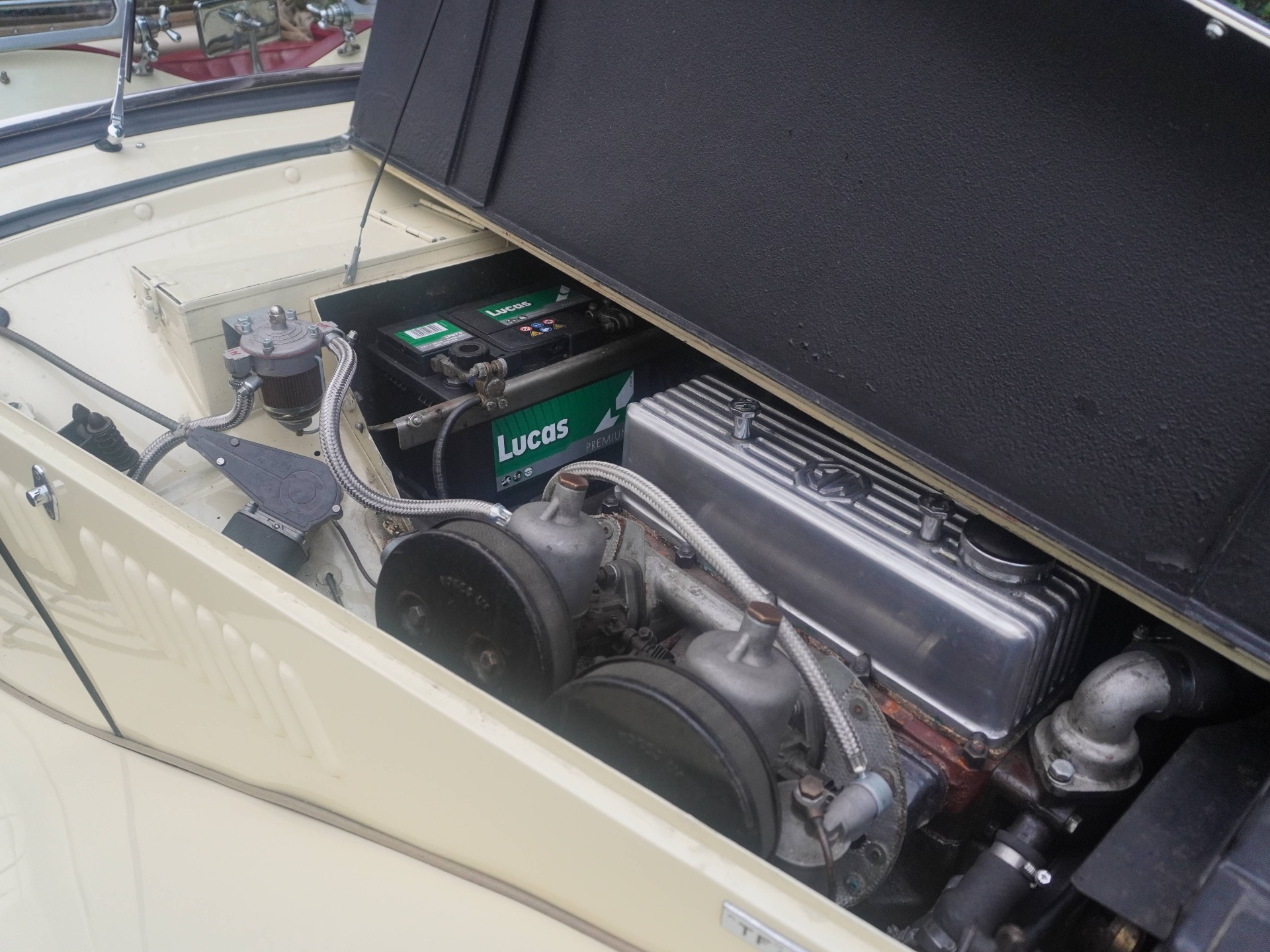
For all the mystique, the SU is one of the most honest carburettors ever made. Air is drawn past a bridge in the throat; the depression above the bridge lifts a piston, and a tapered needle attached to the piston rises out of a central jet. As the piston rises, more air passes the bridge and more fuel is drawn up around the needle. The profile of the needle is what defines the fuel curve.
Above the piston sits a dashpot filled with damper oil. As the piston tries to rise, it must displace oil through a small hole around the damper rod. That short delay enriches the mixture during transient throttle openings, the SU's equivalent of an accelerator pump.
SU's recommendation for H-type carburettors (as fitted to the T-Series) is a 20-weight oil in the dampers. The rule of thumb is straightforward:
- Thicker damper oil, piston rises more slowly, transient mixture richer, throttle response feels a touch crisper on cold days.
- Thinner damper oil, piston rises more freely, transient mixture leaner, response feels softer.
Damper oil is a fine-tuning tool, not a cure for a mis-set carburettor. Start with the recommended 20-weight and leave it alone until everything else is right.
Setting up: the sequence that works
Do this in order. Skipping steps is how people end up chasing their tail.
1. Centre the jet
With the piston lifted and dropped by hand, the piston should fall cleanly and land on the bridge with a distinct, metallic *click*. If it feels sticky or lands softly, the jet is off-centre and the needle is fouling as the piston drops. Slacken the jet-locking screw, lift and drop the piston several times to let the jet find its natural centre around the needle, then tighten the screw and check the drop again.
Do this on both carburettors. A jet that will not centre usually means a bent needle, a worn jet, or a piston that no longer runs true, see the wear section below.
2. Set the needle in the piston
Undo the needle-locking screw and reposition the needle so its shoulder is flush with the base of the piston (or in the specific location called out for your needle profile in the manual, a few competition profiles specify a small offset). Tighten the locking screw gently; it does not need to be heroic.
3. Set the jet / fuel level
With the piston off the bridge, the top of the jet needs to sit a specific distance below the bridge for the mixture to be in the right ballpark before any fine adjustment. As a guide, aim for a jet depth of around 0.160 in below the bridge, and, importantly, get both carburettors matched to within about 0.020 in of each other. Verify the exact figures against the workshop manual for your specific carb and needle combination; the number varies slightly with needle profile.
Matching the two jets to each other matters more than hitting the absolute figure exactly. Two carbs that are 0.010 in "wrong" but identical will tune sweetly; two carbs a long way apart from each other will never idle cleanly no matter what you do at the mixture nuts.
4. Balance airflow with a flow meter
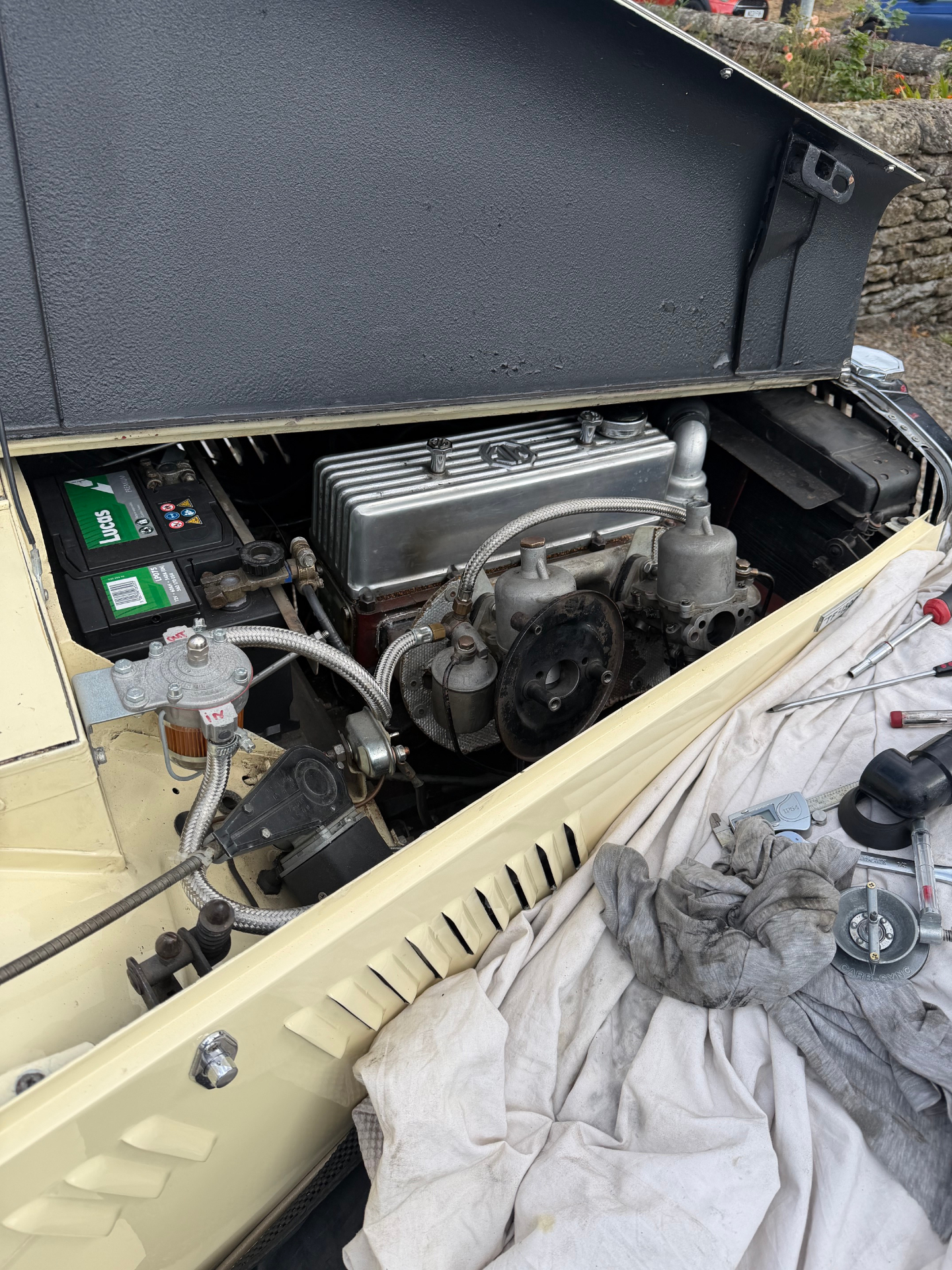
Before you touch mixture, the two carbs must be flowing the same volume of air at idle. Warm the engine thoroughly. Slacken the linkage between the two carburettors so each throttle butterfly is independent. Fit a flow meter over each intake in turn, adjust the two throttle-stop screws until both carbs draw the same reading, then re-tighten the linkage without disturbing the throttle stops.
A flow meter is not optional. Balancing by ear or with a length of tubing works only well enough to convince you it works, and then leaves an idle that hunts.
5. Set the idle mixture, then confirm with the lifting-pin test
With airflow balanced, adjust the mixture on each carb (the jet-adjusting nut on H-types) a flat at a time, starting from the base setting arrived at in step 3. Aim for the highest, steadiest idle at each carb in turn.
Now confirm with the lifting-pin test, the single most useful diagnostic the SU offers. Each carb has a small pin under the dashpot that lifts the piston about 1/32 in. With the engine warm and idling:
- Rise briefly, then settle back to the original idle, mixture is right.
- Rise and hold, or continue to climb, mixture is rich; lean the jet a flat and re-test.
- Immediate drop or stall, mixture is lean; richen the jet a flat and re-test.
Do this on each carb separately. Once both pass the lifting-pin test independently, reconnect the linkage, blip the throttle, let the idle settle, and re-check. A correctly set pair of SUs will idle steadily, respond crisply to the throttle, and give a light-tan colour on all four plugs after a proper run.
Common wear, check before chasing a tune
Old SUs wear in predictable places. A carburettor with any of these faults cannot be tuned to run cleanly, and adjusting mixture is a waste of time until they are fixed.
- Worn throttle spindles. The bushes in the body wear over decades and let air past the spindle, an idle air leak that no mixture setting can correct. Symptom: idle that will not come down, or a hunting idle that changes with a squirt of carb cleaner around the spindle ends. Cure: rebush the bodies and fit new spindles.
- Worn needles and jets. A needle that has been rubbing on a mis-centred jet develops a shiny wear flat along one side; a jet that has been worn oval will run rich no matter what the mixture setting says. Both are cheap to replace; do them together.
- Mismatched piston springs. The dashpot spring must match the needle profile called for on your engine. Two carbs with different-colour springs will never balance properly. Confirm both springs match each other and the specification in the manual.
- Sticking pistons. A piston that does not fall cleanly to the bridge on the jet-centring check is either fouling the needle, gummed up with old damper oil residue, or has a dent in the suction chamber. Clean thoroughly with carburettor cleaner; if it still sticks, the dashpot and piston need attention.
A note on modern fuel
Today's pump petrol is not the petrol these carburettors were designed for. Ethanol content, 5% in E5, 10% in E10, carries oxygen with it, which shifts the effective air/fuel ratio and tends to make an SU-carburetted XPAG run richer than it would on 1950s-spec fuel with the same needle. Modern low-octane blends also want a little more ignition margin than the manual figures assume.
Several specialists now offer needles re-profiled for modern fuel, subtly leaner in the cruise region to compensate for the ethanol shift. If you are running a car often and the plugs come out sooty despite a careful tune, ask a specialist about a modern-fuel needle for your engine and camshaft combination.
Where possible, use E5 super unleaded rather than E10. The lower ethanol content is kinder to old fuel-system rubber, less aggressive to zinc-plated tank internals, and gives the ignition system an easier time under load. See the fuel-system content in the SU fuel-pump article for related advice.
Featured specialist
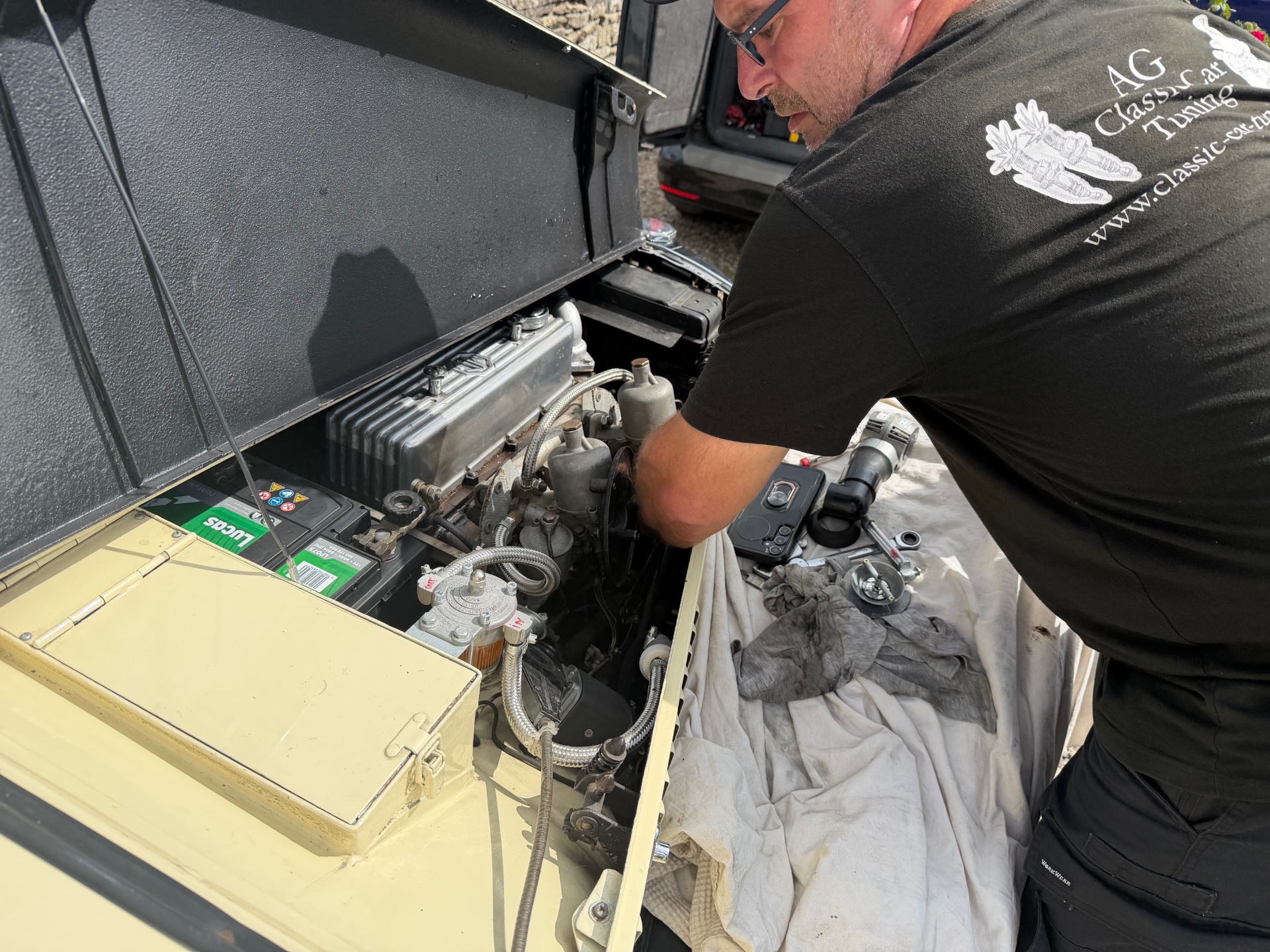
AG Classic Car Tuning, Andrew Grabowski. A mobile classic-car tuning specialist based in Kirkbymoorside, North Yorkshire. Andrew specialises in SU carburettors (H and HS types) and Lucas distributors, will travel to the client, and overhauls carburettors on site, including rebushing throttle spindles and matching needles and springs to the engine as it actually is, rather than as the book says it should be. Editorially, he is one of the people T-Type owners in the north of England mention by name when the subject of a difficult tune comes up.
Website: [classic-car-tuning.com](https://www.classic-car-tuning.com){:target="_blank"} Telephone: 07500 103227 Email: andrew@classic-car-tuning.com
Frequently asked
How do I tune twin SU carburettors on an MG T-Type?
In order: confirm the ignition and compression are right; centre each jet; set the needle shoulder flush with the base of the piston; set jet depth to around 0.160 in below the bridge with the two carbs matched to within about 0.020 in of each other; balance airflow with a flow meter; set idle mixture and confirm with the lifting-pin test. Verify all figures against the workshop manual for your specific carb and needle combination.
What oil goes in SU dashpots?
SU recommend a 20-weight oil in the dampers on H-type carburettors as fitted to the T-Series. Thicker oil enriches the transient mixture during throttle openings; thinner oil leans it. Start with the recommended grade and only change it once everything else is set correctly.
Why are my SU carbs running rich?
Common causes are worn jets, a needle that has been rubbing on a mis-centred jet, damper oil that is too thick, a sticking piston, or simply modern ethanol-blended petrol shifting the effective mixture richer than the original needle profile assumed. Check the wear items first, then consider a modern-fuel needle profile.
Should I tune the carbs or the ignition first?
The ignition, always. A worn distributor, incorrect timing, or dead compression on a cylinder will make a perfectly-set pair of SUs run badly, and no amount of carburettor adjustment will fix it. Get the ignition and compression right, then set the carbs, the tune will hold.