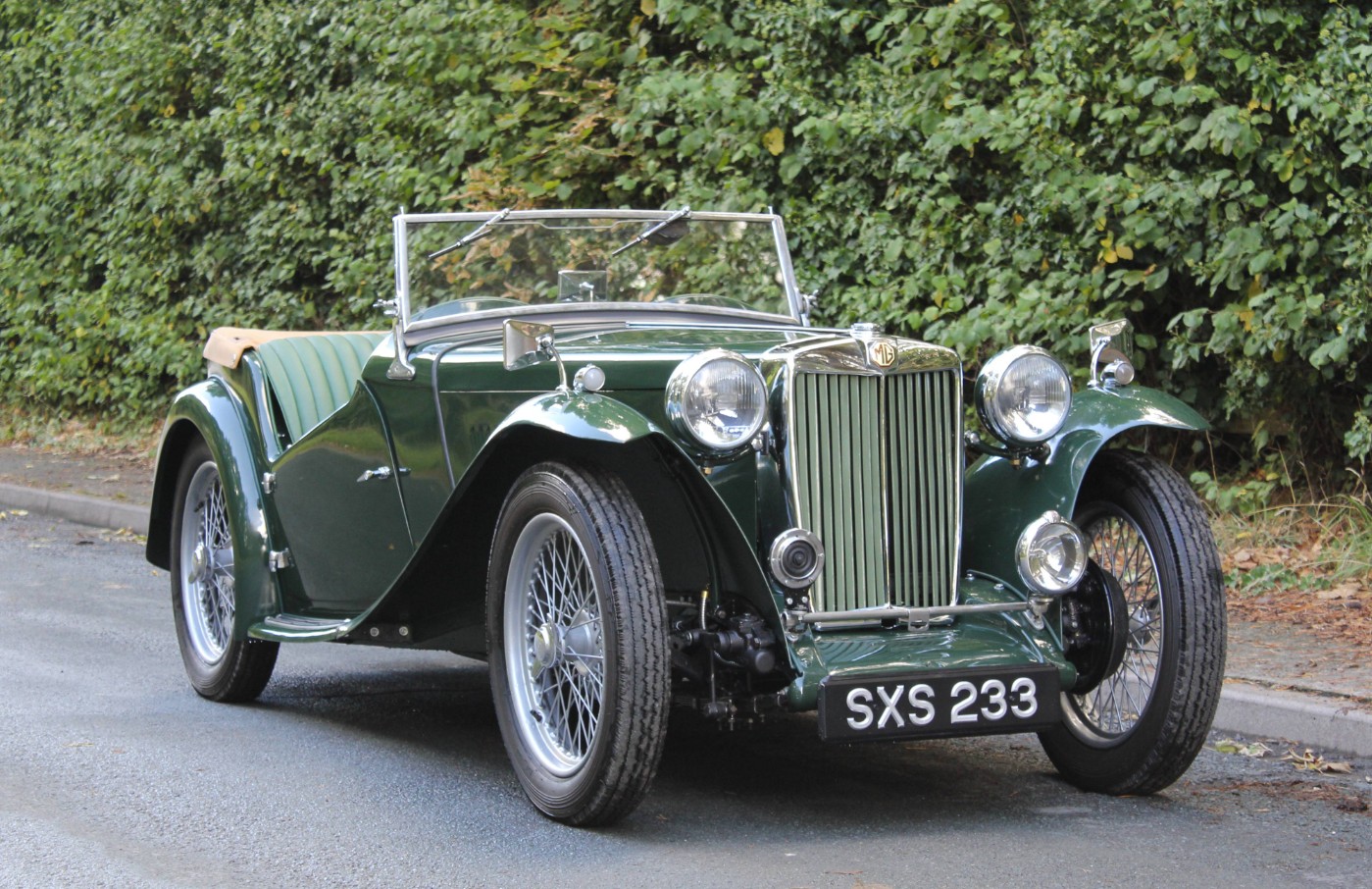
The car that taught America to love sports cars. Roughly 10,001 were built between 1945 and 1949, every one of them right-hand drive. Expect a genuinely vintage experience, cart springs, a beam axle and a steering box, and buy it for exactly that.
What you're buying
The first post-war MG, and mechanically much what the TB had been: the 1,250 cc XPAG at 7.4:1 compression, 54.5 bhp at 5,200 rpm. It cost £527 on the home market in 1947, returned 28 mpg and reached 60 mph in 22.7 seconds, respectable at the time. Only around 2,000 went to North America, and their influence there was wildly out of proportion to that number.
The driving experience is an acquired taste
There is no independent front suspension. The TC rides on cart springs with a beam axle and steers through a box, and its response is decidedly pre-war. Some enthusiasts prefer precisely that; others find the TD and TF's rack-and-pinion and independent front end a revelation. Drive both before you decide which camp you're in. This is not a small difference.
Every TC is right-hand drive. There is no such thing as a factory left-hooker.
What to check
The universal ash-frame checks apply in full and matter more here than anything mechanical. On the steering box, up to three inches of play at the wheel rim is acceptable; less is better. Check kingpin play, and on the wire wheels tap the spokes for even tension and listen for a clonk on moving off that would indicate worn splines.
The engine
The XPAG is straightforward and mostly robust, with one known weak spot: the original crankshaft. Receipts for a modern, high-strength replacement are a plus, not a worry.
Who it suits
Someone who wants the vintage feel and the historical significance, and who will forgive the handling because it came first.